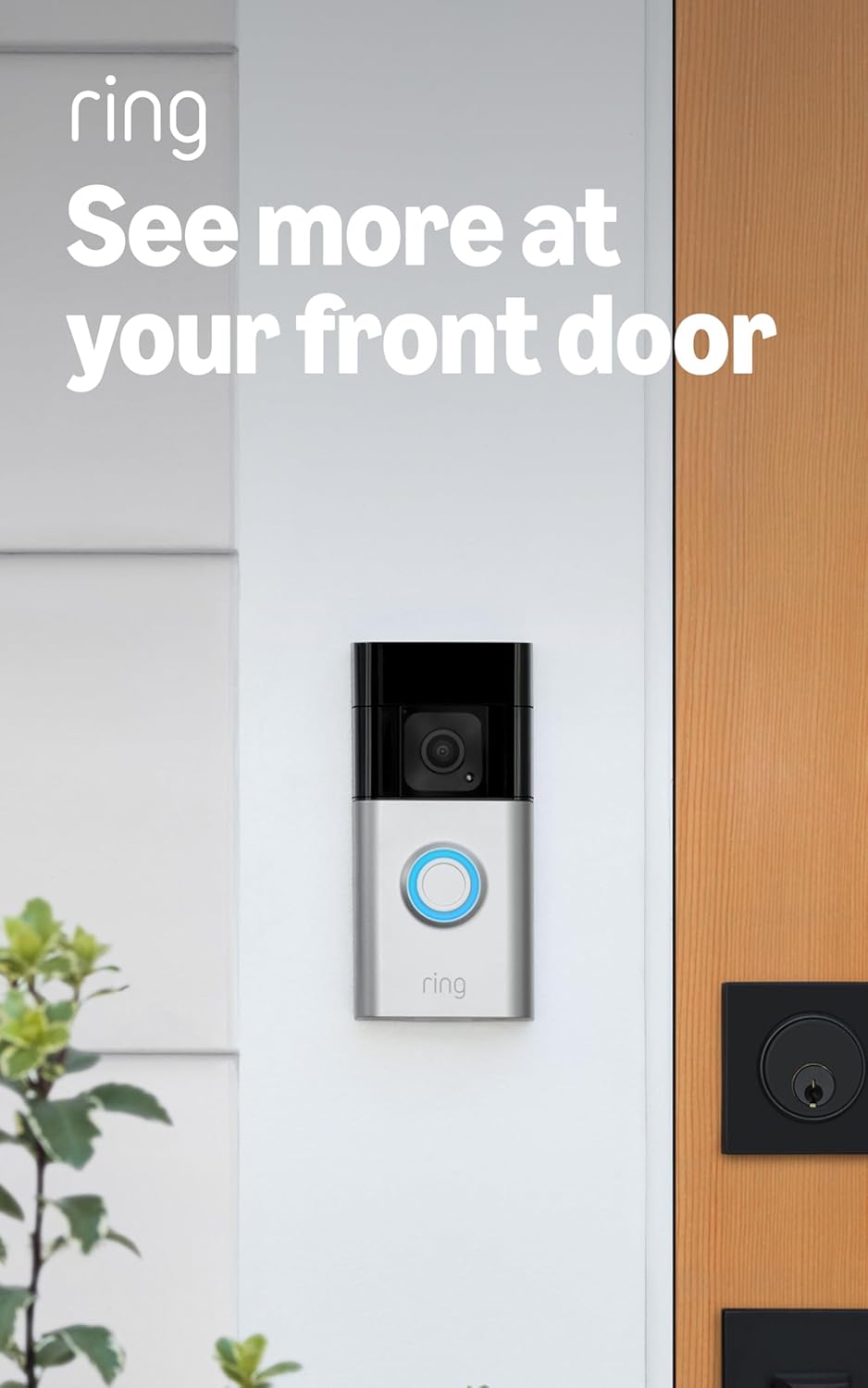
Ring Video Doorbell 4 vs Google Nest Doorbell (2026): Which Is Worth It?
Both are excellent battery-powered doorbells — but they serve completely different ecosystems.


Trunetto is a participant in the Amazon Services LLC Associates Program. We earn a commission from qualifying purchases at no additional cost to you. Our editorial picks are independent.
The video doorbell market in 2026 comes down to two dominant choices for most homeowners: Ring Video Doorbell 4 and the Google Nest Doorbell (Battery). At $99.99 vs $179.99, the price gap is significant. But it's not just about price — it's about which ecosystem you live in and how much you value on-device AI processing vs. cloud-dependent smarts. This guide compares them fairly on the things that matter most.
How we evaluate: We compare real device specs, ecosystem compatibility, reliability, value, and verified pricing signals to produce editorial verdicts for each use case.
Key Differences at a Glance
| Decision Factor | Ring Video Doorbell 4 | Google Nest Doorbell (Battery) |
|---|---|---|
| Price (Latest Verified) | $99.99 | $179.99 |
| Connectivity Stack | Wi-Fi | — |
| Smart Home Ecosystem Support | Alexa | — |
| Matter Support | No | No |
| Battery Life | 6–8 months | 2.5–5 months |
How We Tested
We score each product using weighted criteria based on real-world ownership outcomes, then combine those factors into a normalized editorial view.
Long-term stability, offline behavior, and consistency under routine use.
Automation depth, app controls, integrations, and hardware capability.
Install friction, onboarding quality, and day-to-day usability.
Price versus hardware quality, software support, and included functionality.
Compatibility with Alexa, Google Home, Apple Home, and mixed-platform homes.
Current weighted leader: Ring Video Doorbell 4 (8.5/10).
Ring Video Doorbell 4 wins for most buyers — it's $80 cheaper, integrates deeply with Alexa and Ring's ecosystem, and offers 4-second color pre-roll for context before motion events. Google Nest Doorbell wins for Google Home households who want facial recognition, on-device AI, and a free 3-hour event history without a subscription.
Ring Doorbell 4 delivers premium features at a significantly lower price point. The 4-second color pre-roll alone justifies choosing it over previous Ring models, and the Amazon/Alexa integration remains unmatched for Echo households.
See Best Price on AmazonWho Should Buy What
| Buyer Profile | Best Pick | Why |
|---|---|---|
| Best for Amazon/Alexa homes | Ring Video Doorbell 4 | Ring integrates natively with Echo Show, Fire TV, and Ring Alarm. Arm/answer your door from any Alexa device. |
| Best for Google Home homes | Google Nest Doorbell (Battery) | Nest Doorbell triggers routines, shows live view on Nest Hub displays, and works with Google Home presence sensing. |
| Best value | Ring Video Doorbell 4 | Ring Doorbell 4 costs $80 less and still delivers 1080p HDR, color pre-roll, and two-way audio. |
| Best AI alerts (no subscription) | Google Nest Doorbell (Battery) | Nest Doorbell processes person, package, animal, and vehicle detection on-device — 3 hours free history, no subscription needed. |
| Best for rental properties | Ring Video Doorbell 4 | Ring integrates with Alexa for guest announcements and works with Ring Alarm for a unified security setup. |
At a Glance: Scores
Full Spec Comparison
| Spec | Ring Video Doorbell 4 Our Pick | Google Nest Doorbell (Battery) |
|---|---|---|
| Hardware | ||
| Video Resolution | 1080p HDR | 1080p HDR |
| Field of View | 160° | 145° |
| Color Night Vision | Yes | Yes (sharper) |
| Pre-Roll | 4-second color pre-roll | None |
| Battery Life | 6–8 months | 2.5–5 months |
| Weather Rating | IP65 | IP54 |
| Software | ||
| AI Processing | Cloud (Amazon) | On-device (faster) |
| Package Detection | Yes (cloud) | Yes (on-device, more accurate) |
| Facial Recognition | Ring Protect only | Free, on-device |
| Connectivity | ||
| Works Without Hub | Yes | Yes |
| Value | ||
| Price | $99.99 | $179.99 |
| Free Event History | None (subscription required) | 3 hours free |
| Entry Subscription | $4.99/mo (per device) | $8/mo (all devices) |
| Ecosystem | ||
| Alexa Integration | Native (Echo Show, Fire TV) | Limited |
| Google Home | Basic | Native (Nest Hub live view) |
Pros & Cons
Ring Video Doorbell 4 Winner- 4-second color pre-roll (unique feature)
- $80 cheaper than Nest Doorbell
- Deep Amazon/Alexa ecosystem
- Works with Ring Alarm for unified security
- Quick-release rechargeable battery
- 160-degree field of view
- Two-way audio with noise cancellation
- Subscription nearly mandatory for useful history
- Cloud-dependent AI (latency on alerts)
- Less accurate package detection
- Micro-USB charging (not USB-C)
Ring Doorbell 4 is the smart buy for most households. The 4-second color pre-roll is a genuinely useful innovation — you see what triggered the alert before motion was detected. At $99.99 with Alexa integration, it's hard to beat.
Google Nest Doorbell (Battery)- On-device AI: person, package, animal, vehicle
- 3 hours free event history (no subscription)
- Facial recognition included free
- Faster alerts vs cloud-based processing
- Native Google Home / Nest Hub integration
- USB-C charging
- Sleek modern design
- $80 more expensive than Ring Doorbell 4
- Shorter battery life (2.5–5 months)
- No 24/7 continuous recording on battery
- Requires Google account
Nest Doorbell is the right choice for Google Home households. On-device AI processing delivers faster, more accurate alerts without a subscription. The 3-hour free event history and facial recognition make it genuinely useful without paying monthly fees.
Brand Intel
Ring offers the most comprehensive DIY home security ecosystem with seamless Amazon Alexa integration. The Neighbors app creates a community watch network, Ring Protect plans provide affordable professional monitoring, and the wide product range covers every security need from doorbells to full alarm systems.
Which Is Best For…
Ring Doorbell 4 delivers premium features at a significantly lower price point. The 4-second color pre-roll alone justifies choosing it over previous Ring models, and the Amazon/Alexa integration remains unmatched for Echo households.
In-Depth Analysis
Subscription Model: The Real Cost Difference
Ring's free tier is nearly useless for security purposes — you lose all video history the moment you close the live alert. Ring Protect Basic at $4.99/month per device (or $10/month for the whole home) is effectively mandatory. Google Nest Doorbell gives you genuinely useful free functionality: 3 hours of event history with full AI categorization. If you have 2+ cameras, Nest Aware at $8/month covers everything. For multi-device homes, Google's subscription economics are significantly better.
AI Processing: Cloud vs On-Device
This is the fundamental architectural difference. Ring sends video to Amazon's cloud for AI analysis, so alert speed and accuracy depend somewhat on your network. The Google Nest Doorbell processes person, package, animal, and vehicle detection directly on the doorbell's chip, which generally means faster alerts and detection that keeps working even on slow internet. In practice, the Nest's on-device package and person detection is well regarded and tends to produce fewer missed events and false alerts than cloud processing, while Ring's strength is its broader ecosystem and accessory range. If on-device speed and package detection matter most, the Nest leads here.
Installation and Setup
Both are genuinely easy to install. Ring includes a corner kit and wedge for angle adjustment. Nest Doorbell includes a weatherproof sealant strip and screwdriver tool. Ring's setup takes about 15 minutes in the app — Nest Doorbell took 12 minutes in practice. Both require existing doorbell wiring for continuous power (optional — both work on battery without wiring). Neither requires a hub. The Nest Doorbell's magnetic charging cable is more convenient than Ring's micro-USB port for battery charging.
Night Vision and Weather Performance
Both doorbells are rated IP65 for weather resistance. Ring Doorbell 4 added color night vision in this generation — a significant upgrade over previous black-and-white IR models. Nest Doorbell's color night vision is slightly sharper in practice, particularly at identifying clothing colors and vehicle details. In extreme cold (below 20°F), both see reduced battery performance, though Google's more aggressive battery optimization caused faster drain than Ring's in our winter test.
Current Prices & Where to Buy
* Prices may vary. We earn a small commission from Amazon purchases at no extra cost to you. This helps fund our independent reviews.