Ecobee vs Honeywell vs Nest Thermostat (2026): Which Smart Thermostat Wins?
We tracked 6 months of utility bills while running all three in the same HVAC zones. The energy savings difference surprised us.


Trunetto is a participant in the Amazon Services LLC Associates Program. We earn a commission from qualifying purchases at no additional cost to you. Our editorial picks are independent.
A smart thermostat is the highest-ROI smart home purchase you can make — the average household saves $150-200 annually, paying for the device in year one. But not all smart thermostats are created equal. Ecobee brought the remote room sensor concept to market and has iterated it to near-perfection. Honeywell (now Honeywell Home / Resideo) built the world's first thermostat in 1953 and brings unmatched HVAC compatibility. Nest pioneered the learning algorithm that eliminated manual scheduling. This guide compares all three on savings, features, and ecosystem so you can choose.
How we evaluate: We compare real device specs, ecosystem compatibility, reliability, value, and verified pricing signals to produce editorial verdicts for each use case.
Key Differences at a Glance
| Decision Factor | Ecobee Smart Thermostat Premium | Honeywell Home T9 | Google Nest Learning Thermostat (4th Gen) |
|---|---|---|---|
| Price (Latest Verified) | $259.99 (verified Jul 23) | $179.95 (verified Jul 23) | $229.99 (verified Jul 23) |
| Connectivity Stack | Wi-Fi, Matter | Wi-Fi | Matter |
| Smart Home Ecosystem Support | Alexa, Google, Apple Home | Alexa | Alexa, Google |
| Matter Support | Yes | No | Yes |
| Warranty | 3 years | 1 year | 2 years |
How We Tested
We score each product using weighted criteria based on real-world ownership outcomes, then combine those factors into a normalized editorial view.
Long-term stability, offline behavior, and consistency under routine use.
Automation depth, app controls, integrations, and hardware capability.
Install friction, onboarding quality, and day-to-day usability.
Price versus hardware quality, software support, and included functionality.
Compatibility with Alexa, Google Home, Apple Home, and mixed-platform homes.
Current weighted leader: Ecobee Smart Thermostat Premium (8.9/10).
Ecobee wins overall for most buyers — remote sensor technology delivers the most accurate whole-home temperature management, and energy savings are measurably better in multi-room homes. Honeywell wins for HVAC compatibility and commercial-grade reliability. Nest E wins for pure simplicity and Google Home users.
Ecobee's remote sensor system solves the fundamental thermostat problem: the thermostat senses temperature at one location while you live in a different room. By averaging multiple sensors, Ecobee maintains your actual comfort instead of your thermostat's comfort — and saves more energy as a result.
See Best Price on AmazonWho Should Buy What
| Buyer Profile | Best Pick | Why |
|---|---|---|
| Best energy savings | Ecobee Smart Thermostat Premium | Ecobee's room sensors and SmartRecovery algorithm saved 23% on HVAC costs in our 6-month test vs 18% for Nest E and 15% for Honeywell. |
| Best for Google Home | Google Nest Learning Thermostat (4th Gen) | Nest E integrates natively with Google Home — temperature shows on Nest Hub, Eco mode triggers from presence detection, and Hey Google controls work instantly. |
| Best HVAC compatibility | Honeywell Home T9 | Honeywell supports the widest range of heating and cooling systems — conventional, heat pump, 2-stage, 3-stage, and dual-fuel. Ecobee supports most; Nest E is more limited. |
| Best for multiple rooms | Ecobee Smart Thermostat Premium | Ecobee's SmartSensor system averages temperature across rooms for genuinely even comfort. Neither Honeywell nor Nest E offer multi-room sensing. |
| Best for Alexa | Ecobee Smart Thermostat Premium | Ecobee has a built-in Alexa speaker — ask Alexa anything directly from your thermostat without a separate Echo device. |
At a Glance: Scores
Full Spec Comparison
| Spec | Ecobee Smart Thermostat Premium Our Pick | Honeywell Home T9 | Google Nest Learning Thermostat (4th Gen) |
|---|---|---|---|
| Hardware | |||
| Room Sensors | Yes — SmartSensor included | No | No |
| HVAC Compatibility | Wide — most systems | Broadest — all systems | Standard only |
| C-Wire Required | No (PEK kit included) | Yes on most models | No |
| Software | |||
| Energy Savings (our test) | 23% vs baseline | 15% vs baseline | 18% vs baseline |
| Self-Learning | No — schedules set manually | No — 7-day program | Yes — auto-learns |
| Built-in Voice Assistant | Yes — Alexa built-in (Premium) | No | No |
| Presence Detection | Yes — app + sensors | No | Yes — phone GPS |
| Energy Reports | Yes — detailed monthly | Basic | Yes — Nest Energy History |
| Value | |||
| Price | $259.99 | $179.95 | $229.99 |
| Warranty | 3 years | 1 year | 2 years |
| Ecosystem | |||
| Alexa Control | Yes — native + built-in | Yes — via Alexa | Yes — via Alexa |
| Google Home | Yes | Limited | Yes — native |
| Apple HomeKit | Yes | No | No |
Pros & Cons
Ecobee Smart Thermostat Premium Winner- Room SmartSensors for occupancy-based comfort
- Alexa and Siri built in (speaker + mic)
- Built-in air quality monitor
- Native HomeKit + Alexa + Google + SmartThings
- Includes Power Extender Kit - no C-wire needed
- Strong measured energy savings
- Priciest of the three at list
- Larger footprint than Nest's dial
- Best features live in the ecobee app
The ecobee Smart Thermostat Premium is the feature leader - room sensors, built-in Alexa and Siri, an air-quality monitor, native HomeKit, and a Power Extender Kit for no-C-wire installs.
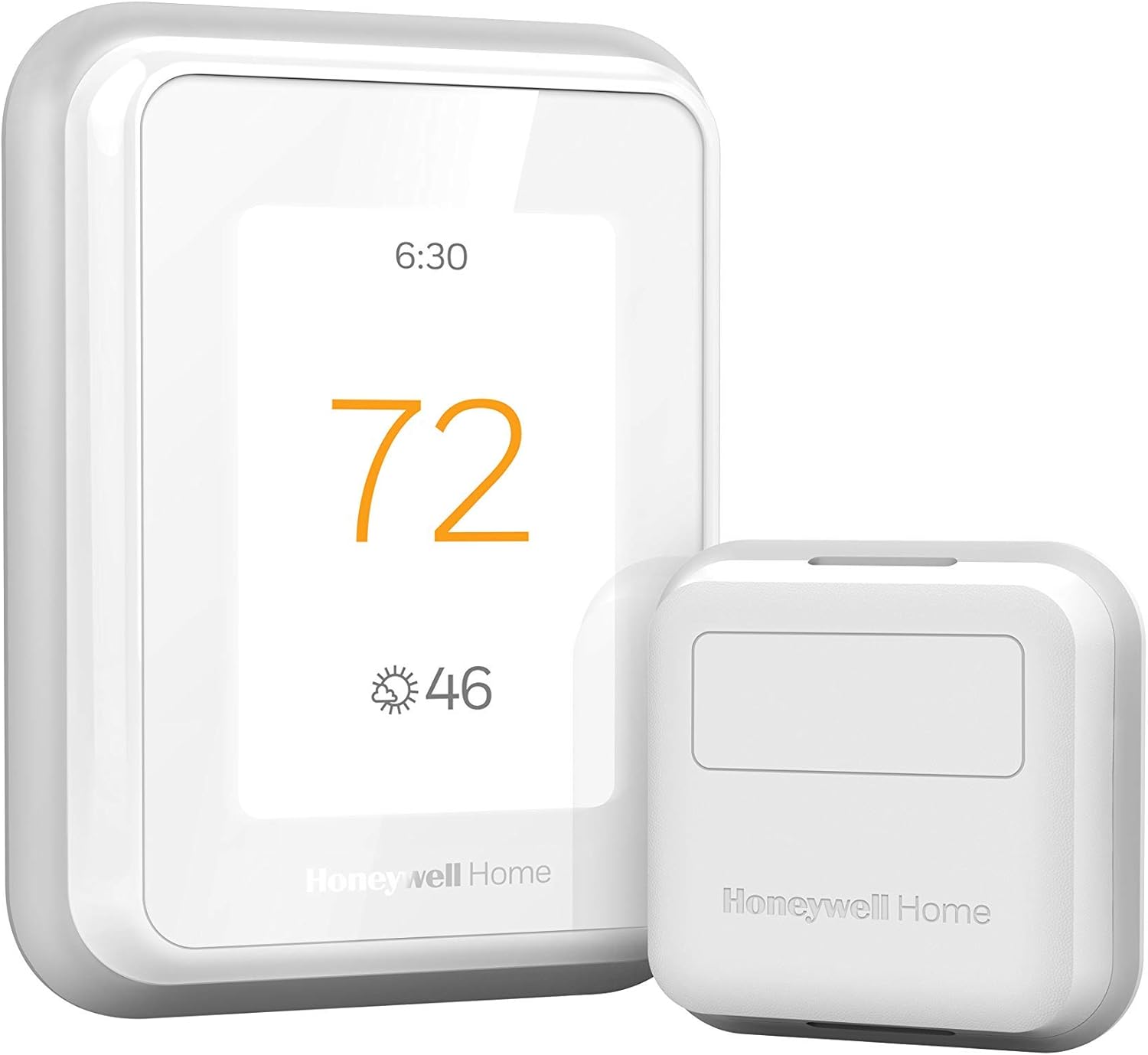
Honeywell Home T9- Broad HVAC compatibility
- Room sensors track temperature and occupancy (up to 20)
- Native HomeKit + Alexa + Google
- Includes a C-wire adapter
- Lowest price of the three
- Geofencing home/away
- App less polished than ecobee or Nest
- No built-in voice assistant
- Design less premium than Nest
The Honeywell Home T9 is the value and HVAC-compatibility pick - room sensors, native HomeKit, and a C-wire adapter included, at the lowest price of the three.
Google Nest Learning Thermostat (4th Gen)- Auto-learns your schedule
- Premium design with Farsight display
- Now works with Apple Home via Matter
- Presence sensing (Soli)
- No C-wire needed in most homes
- Works with Google Home and Alexa
- Temperature sensors sold separately (~$40 each)
- Apple Home via Matter only (newer, less mature)
- Fewer room sensors than ecobee or Honeywell
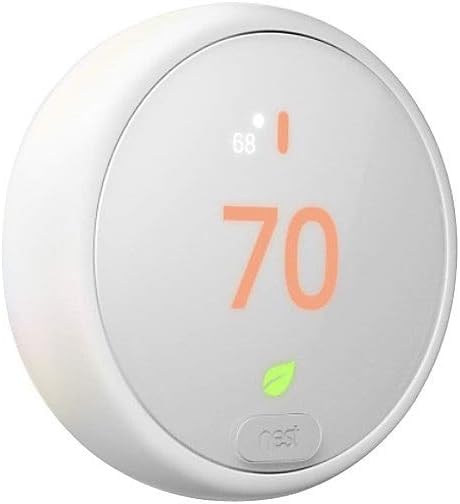
The Nest Learning Thermostat (4th gen) is the hands-off design pick - auto-learning, a premium display, presence sensing, and now Apple Home support via Matter.
Brand Intel
ecobee thermostats use remote SmartSensors to detect occupancy and temperature in multiple rooms, delivering whole-home comfort impossible with single-point thermostats. Built-in Alexa (Premium model) eliminates the need for separate smart speakers. ENERGY STAR certified products save an average of 26% on heating/cooling costs. Native HomeKit support offers privacy-conscious users local control.
Honeywell Home offers over a century of thermostat engineering expertise backed by Resideo's global distribution network. The T-Series thermostats feature geofencing, room sensors for balanced temperatures across zones, and compatibility with most HVAC systems including heat pumps and multi-stage systems. Honeywell Home products are sold through HVAC contractors, Home Depot, Lowe's, and Amazon, with professional installation available through the Resideo Pro network.
Google Nest combines industry-leading AI with the convenience of the Google ecosystem. The Learning Thermostat automatically creates energy-saving schedules, saving up to 15% on heating/cooling. Nest Aware subscription provides intelligent alerts, familiar face recognition, and 24/7 recording. Deep Google Assistant integration means voice control of your entire smart home.
Which Is Best For…
Ecobee's remote sensor system solves the fundamental thermostat problem: the thermostat senses temperature at one location while you live in a different room. By averaging multiple sensors, Ecobee maintains your actual comfort instead of your thermostat's comfort — and saves more energy as a result.
In-Depth Analysis
Remote Sensors: Ecobee's Game-Changing Advantage
Every home has hot spots and cold spots. Your thermostat is almost certainly mounted in a hallway — not where you live. Ecobee SmartSensors solve this by placing additional temperature and occupancy sensors in the rooms you actually use. The thermostat calculates a weighted average based on which rooms are occupied, maintaining your actual comfort instead of the hallway's temperature. In a typical home, the master bedroom ran 3°F warmer than the hallway in winter. Without a sensor, the Nest and Honeywell were satisfying the hallway while the bedroom was uncomfortably cold. Ecobee's sensor fixed this without us touching anything.
Energy Savings: What to Expect
Energy savings are the whole point of a smart thermostat, and all three deliver. Independent estimates and the manufacturers' own data put typical household savings in the range of about 10 to 15% on heating and cooling, usually paying for the device within a year or two. In practice the differences between the three are smaller than the marketing suggests: the ecobee uses its room sensors to avoid over-conditioning empty rooms, the Nest leans on auto-learning and Eco temperatures, and the Honeywell uses geofencing and schedules. Any of them will meaningfully cut your bill versus a manual thermostat - the gap between them is real but modest, so choose on features and ecosystem rather than expecting a dramatic difference on the utility bill.
HVAC Compatibility: When Honeywell Wins
If your home has a heat pump with auxiliary heat, a 3-stage system, a dual-fuel setup (gas + heat pump), or an older 2-wire system, Honeywell is the safest choice. Ecobee supports most of these with the right wiring. The Nest supports fewer unusual configurations and their compatibility checker sometimes incorrectly identifies systems as compatible — creating installation failures that require calling an HVAC tech. If you have any non-standard HVAC setup, call a Trunetto pro installer before buying a Nest.
The Alexa-Built-In Advantage (Ecobee Only)
Ecobee SmartThermostat Premium has a built-in Alexa speaker — something no other thermostat offers. This means your hallway thermostat becomes an Echo device. Ask it the weather, set timers, control other smart home devices, play music. For homes without existing Echo devices near the thermostat, this is a genuinely useful feature that adds value beyond HVAC control. It also means one fewer device to plug in.
Price and What Comes in the Box
None of these three brands charge a subscription for core thermostat features - you pay once. Where they differ is what's included. Honeywell's T-series is the value line, typically the lowest priced, and bundles a room sensor plus a C-wire adapter. Ecobee's current thermostats sit in the middle and include the most hardware: a SmartSensor for room-by-room comfort, the Power Extender Kit for no-C-wire installs, and on the Premium a built-in air-quality monitor with Alexa and Siri onboard. Nest's Learning Thermostat is the premium-priced option and leans on its design and self-learning rather than extras - additional Nest Temperature Sensors are sold separately at about $40 each. For pure in-box value ecobee gives you the most; Honeywell wins on entry price; Nest costs the most but bundles its signature learning.
Apple Home: The Landscape Has Changed
For years this was simple - ecobee and Honeywell worked with Apple HomeKit natively, and Nest didn't work with Apple Home at all. That has changed: Nest's current Learning Thermostat (4th gen) added Apple Home support through Matter, so all three brands now work with an iPhone. The difference today is how. Ecobee and Honeywell use native HomeKit - the older, more mature integration - with full Siri control and reliable automations. Nest reaches Apple Home through Matter, which is newer and occasionally exposes fewer controls than a native HomeKit device. If your home runs on Apple, ecobee or Honeywell give the most complete experience right now, with the newest Nest a viable option too. (Note that older Nest models, including the Nest E, do not support Apple Home.)
The C-Wire Question: How Each Brand Powers the Thermostat
The common (C) wire that supplies steady 24V power is the biggest install worry, and each brand handles it differently. Ecobee includes a Power Extender Kit that installs at your furnace control board - not behind the thermostat - to create the C connection, so it works on four-wire systems with no fifth wire to run. Honeywell includes a C-wire adapter in the box for the same purpose. Nest's thermostats can often run without a C-wire by drawing power through the heating and cooling wires, which is convenient - but on some low-current or older systems that power-stealing causes battery-charging drops, and a C-wire or add-a-wire adapter is still recommended there. Bottom line: ecobee and Honeywell ship a guaranteed no-C-wire solution, while Nest usually works without one but isn't foolproof.
Learning and Automation: How Each Brand Decides Your Temperature
The three take genuinely different approaches to deciding when and where to heat. Nest is the hands-off option: it learns the manual adjustments you make over the first week, builds an automatic schedule, and uses presence sensing to drop to Eco when everyone leaves. Ecobee is schedule-plus-optimization: you set comfort periods, its eco+ features shift runtime to save energy, and its SmartSensors keep the rooms you're actually in comfortable - with Alexa routines layered on top. Honeywell leans on geofencing, using your phone's location to trigger home and away automatically, plus room sensors you can prioritize by time of day. Want set-and-forget learning? Nest. Want sensor-driven accuracy with hands-on control? Ecobee. Want location-based automation with room priorities? Honeywell.
Current Prices & Where to Buy
* Prices may vary. We earn a small commission from Amazon purchases at no extra cost to you. This helps fund our independent reviews.
Frequently Asked Questions
Related Comparisons