

Why Won't My Ecovacs Deebot Return to the Charging Dock?
- Objects blocking the front of the charging dock
- Dock moved to different location since last map save
- IR dock signal blocked by dust on dock sensors
Problem Description
Your Ecovacs Deebot finishes cleaning but cannot find its way back to the charging dock. The robot wanders randomly and eventually stops in the middle of a room with a dead battery. Or it approaches the dock but misses and keeps searching. This means the robot cannot auto-empty auto-refill water or recharge leaving it stranded until you manually carry it back.
Why This Happens in Real Homes
Dirty charging contacts are the single most common cause — the robot reaches the dock but drives past it because the contacts do not make a connection. The second most common issue is dock placement near reflective surfaces (glass, mirrors) that interfere with the IR guidance signal. Users who clean the contacts monthly and keep the dock away from glass report very few docking failures. Map corruption after moving the dock is the third most common cause.
Symptoms
- Robot finishes cleaning but wanders instead of docking
- Robot approaches dock area but misses and keeps searching
- Robot stops in middle of room with dead battery after cleaning
- Dock auto-empty station never activates after cleaning
- Robot takes 20 plus minutes to find dock in same room
- App shows robot searching for dock indefinitely
Recognize these? Here's what usually causes it.
Common Causes
- Objects blocking the front of the charging dock
- Dock moved to different location since last map save
- IR dock signal blocked by dust on dock sensors
- Room too dark for camera-based dock locating
- Robot started cleaning from non-dock location
- Dock placed in corner restricting robot approach angle
Most fixes happen in the first 3 steps.
Do not move the charging dock while the robot is cleaning. The robot saves the dock position at the start of the clean and navigates back to that location. If the dock moves, the robot will drive to where the dock was and circle endlessly. If you must move the dock, wait for the robot to finish or manually stop the clean first.
Tools & Requirements
These tools will help you complete this fix.
As an Amazon Associate we earn from qualifying purchases.
Step-by-Step Solution
Check the dock placement requirements
The Deebot needs the dock against a flat wall with at least 1.5 feet of clear space on each side and 4 feet of open floor in front. If furniture, shoes, cables, or other objects are within this zone, the robot cannot line up with the dock IR signal. Also make sure the dock is on hard floor, not carpet — carpet can block the charging contacts from making a clean connection.
Needed for this step
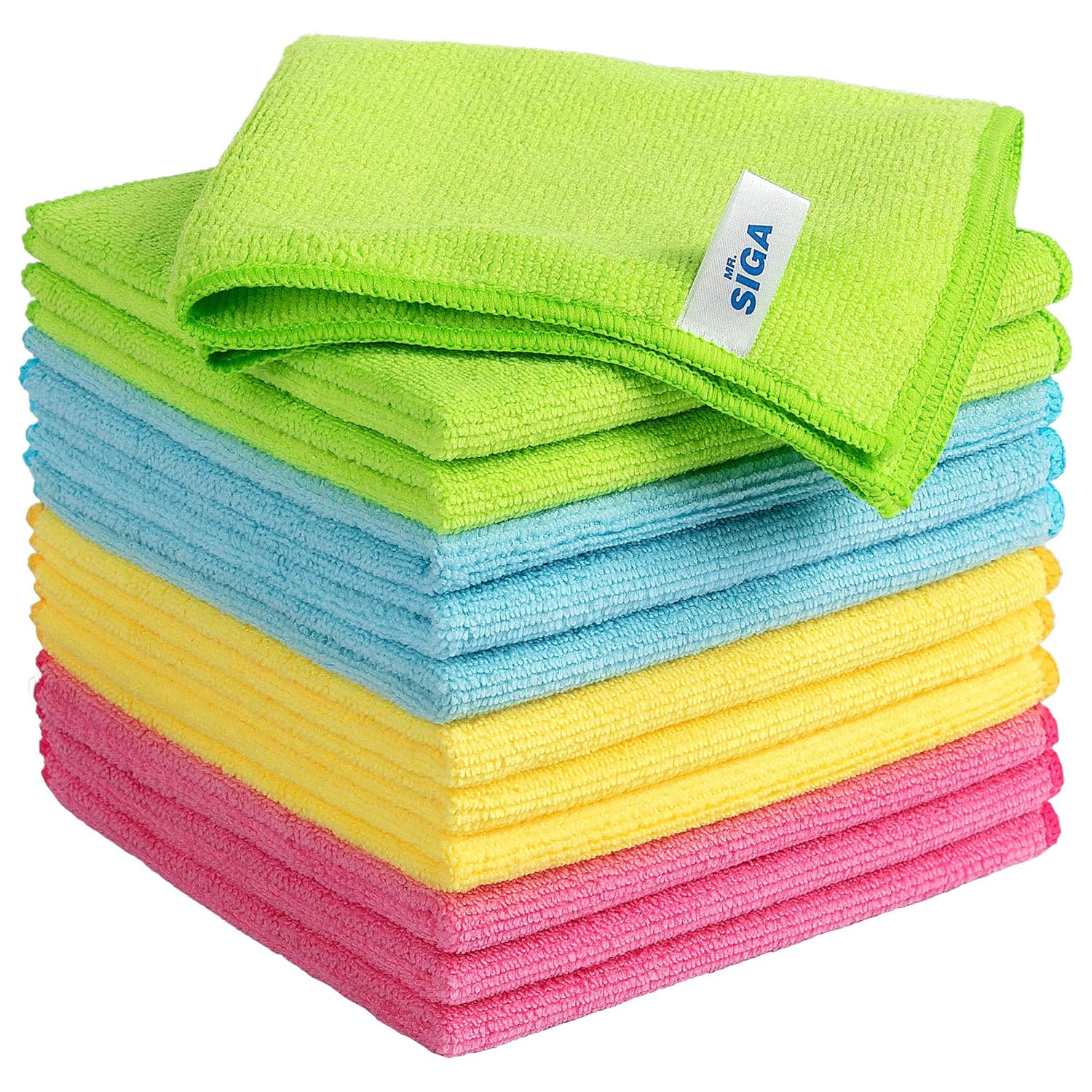
MR.SIGA Microfiber Cleaning Cloth,Pack of 12,Si...
This helps complete the fix you are currently reading.
$13.99Clean the charging contacts
Flip the Deebot over and look at the two or four metal charging contacts on the bottom. Wipe them with a dry cloth or rubbing alcohol. Then clean the matching contacts on the dock. Dirty or oxidized contacts prevent the robot from detecting it has reached the dock — it may drive over the dock and keep searching. This is the most common fix for a robot that gets close but does not charge.
Check the dock IR sensors
The dock has infrared sensors that guide the robot during the final approach. If these are dusty, blocked, or pointed at a reflective surface (glass door, mirror, metallic furniture), the robot gets confused. Wipe the IR windows on the front of the dock with a dry cloth. Move the dock away from mirrors, glass, and direct sunlight — strong IR from sunlight can overwhelm the dock signal.
Clear the path between the robot and the dock
The Deebot uses its map to navigate back to the dock. If the path is blocked by a closed door, moved furniture, or new obstacles, it cannot reach the dock and will wander until the battery dies. Make sure all doors between the robot cleaning area and the dock are open. If you frequently move furniture, the robot map may be outdated — run a new mapping clean to update it.
Check if the map has the dock position correct
Open the Ecovacs app and look at the map. The dock icon should match the actual dock location. If you moved the dock since the last mapping run, the robot is navigating to the old position. Either move the dock back or delete the map and let the robot create a new one with the dock in its current location. On newer models, you can relocate the dock in the app without remapping.
Reset the dock by power cycling
Unplug the dock from the wall, wait 30 seconds, and plug it back in. The dock LED should turn on. Place the robot directly on the dock contacts manually — if it starts charging when placed by hand, the dock is working and the issue is with the robot navigation or approach. If it does not charge even when placed manually, the dock power supply or contacts may be faulty.
Factory reset the robot navigation
If the robot consistently fails to find the dock even with correct placement and clean contacts, reset its navigation data. In the Ecovacs app, go to Settings > Reset Map. The robot will need to run a fresh mapping clean to relearn your floor plan and dock location. Do not interrupt this clean — let it complete fully so the map is accurate. After remapping, test the return-to-dock function.
Quick Solutions
Still having issues? This is usually the deeper cause below.
If drain continues after replacing batteries, check the event history — a stuck-open sensor or rapid polling loop burns through batteries in days.
If the Deebot fails to dock and the battery dies on the floor, carry it back and place it on the dock manually to charge. Once charged, run a full mapping clean with all doors open. The most reliable dock location is in a hallway or open area with no reflective surfaces nearby — avoid placing it next to glass doors, mirrors, or in direct sunlight.
Robot vacuums that 'stop working' are usually fighting a corrupted map from moved furniture — a fresh floor scan fixes the majority of reported failures.
- Objects blocking the front of the charging dock
- Dock moved to different location since last map save
- IR dock signal blocked by dust on dock sensors
- Room too dark for camera-based dock locating
- Robot started cleaning from non-dock location
Before you go — try one of these (they fix most cases).
Official Manufacturer Manual
Ecovacs provides official product documentation through their online manual rather than downloadable PDF. Access setup guides, troubleshooting steps, and product specifications for your Ecovacs Deebot.
Source: ecovacs.com
Need More Help? Ecovacs Support
Note: The contact information below connects you directly to Ecovacs's official customer support team, not Trunetto. They can help with warranty claims, device replacements, and advanced technical issues.
Accessories owners commonly pair with Ecovacs Deebot.

Amazon Basics 20-Pack AA Alkaline High-Performance Batter...

Amazon Basics CR2032 3V Lithium Coin Cell Batteries for K...

Duracell Coppertop Double AA Batteries with Power Boost I...
As an Amazon Associate we earn from qualifying purchases.
Guide Improvements
- Updated June 16, 2026
Added dock placement requirements, contact cleaning, IR sensor maintenance, and map-based dock position troubleshooting.
What changed:- Added dock placement clearance requirements
- Added charging contact cleaning procedure
- Added IR sensor and sunlight interference fix
- Added map-based dock position verification
- Added real-world context about contact cleaning frequency
Source: Trunetto editorial update


