

Why Is My Ecobee Temperature Reading Inaccurate?
- Thermostat mounted on exterior wall absorbing heat or cold
- Internal components generating heat affecting built-in sensor
- Thermostat located near heat source like vent or appliance
Problem Description
Your Ecobee thermostat is displaying a temperature that does not match the actual room temperature often reading several degrees too high or too low. Inaccurate temperature readings cause your HVAC system to run when it should not or fail to maintain comfortable temperatures. This is a common complaint that can usually be resolved through sensor calibration placement adjustments or offset settings.
Why This Happens in Real Homes
An inaccurate thermostat temperature is usually placement — mounted on an exterior wall, near hot pipes, in a draft, or in sun, the thermostat reads that spot rather than the room. Its internal sensor is at the wall.
Start by considering placement: an exterior wall or one with hot/cold pipes behind it skews the reading. Where you can't move it, use a SmartSensor in a representative spot and let the thermostat average or prioritize it, or apply a small calibration offset. The fix is giving it (or a sensor) a fair read of the room's air.
Symptoms
- Thermostat reads 3 to 7 degrees higher than actual room temp
- HVAC runs constantly because thermostat thinks room is too warm
- Room feels cold but thermostat shows comfortable temperature
- SmartSensor and thermostat readings disagree significantly
- Temperature swings widely throughout the day
- Thermostat display temperature does not change for hours
Recognize these? Here's what usually causes it.
Common Causes
- Thermostat mounted on exterior wall absorbing heat or cold
- Internal components generating heat affecting built-in sensor
- Thermostat located near heat source like vent or appliance
- Direct sunlight hitting thermostat at certain times of day
- Thermostat installed in hallway with poor air circulation
- SmartSensor and thermostat competing for temperature control
Most fixes happen in the first 3 steps.
Setting an excessive temperature correction offset greater than 10 degrees may indicate a hardware sensor failure. Contact Ecobee support for a warranty evaluation if the offset needed is extreme.
Step-by-Step Solution
Place a known-accurate thermometer next to the Ecobee
Before adjusting anything, measure the actual error. Place a digital thermometer (not a cheap mercury bulb type) within 6 inches of the Ecobee thermostat on the same wall. Wait 30 minutes for both to stabilize. Compare the readings. A difference of 1°F is within normal tolerance for the Ecobee sensor. 2-3°F is correctable with the built-in calibration offset. More than 5°F usually indicates a placement issue rather than a sensor problem.
Check thermostat placement for heat sources
The most common cause of inaccurate Ecobee readings is the thermostat being installed near a heat source. Check for: a supply vent directly above or below the thermostat, direct sunlight hitting the wall at certain times of day, a hot water pipe or chimney on the other side of the wall, or the thermostat being in a hallway near the kitchen. Any of these can make the Ecobee read 3-8°F higher than the actual room temperature. If the thermostat is in a bad spot and you cannot move it, use room sensors to override the built-in sensor — go to Comfort Settings and deselect the thermostat as a participating sensor, leaving only the room sensors.
Apply the temperature correction in the Ecobee app
Open the Ecobee app, go to the thermostat Settings, then Installation Settings, then Thresholds or Temperature Correction. You can apply an offset of up to +/- 10°F. If your reference thermometer reads 72°F but the Ecobee shows 74°F, set the correction to -2°F. The correction applies to the display and to all heating and cooling decisions. Only apply this after confirming the error is consistent — check the reference thermometer at different times of day. If the error changes significantly between day and night, placement is the issue and correction alone will not fix it.
Check if room sensors are skewing the average
If you have Ecobee room sensors, the thermostat displays an averaged temperature from all sensors included in the active Comfort Setting — not just the built-in sensor. This average can look wrong if one sensor is in a particularly hot or cold room. In the Ecobee app, tap Sensors to see each sensor individual reading. If one sensor reads significantly different from the others, it is pulling the average. Either exclude that sensor from the current Comfort Setting or fix its placement. You can also use Follow Me mode, which weights the temperature toward rooms where occupancy is detected.
Verify accuracy after HVAC cycles
Check the thermostat reading right after a heating or cooling cycle completes. The HVAC system can heat the wall behind the thermostat, causing a temporary spike of 1-2°F that settles after 5-10 minutes. If the thermostat reads accurately during idle periods but spikes right after the furnace or AC runs, the thermostat is too close to a supply duct or the ductwork behind the wall is radiating heat into the sensor. This is harder to fix — moving the thermostat to a different wall is the permanent solution. Adding room sensors and relying on them instead of the built-in sensor is the easier workaround.
Quick Solutions
Still having issues? This is usually the deeper cause below.
Schedules that skip randomly are usually a daylight-saving holdover — delete and recreate the schedule to clear the corrupted entry.
The Temperature Correction offset is the fastest fix. Most Ecobee thermostats read 2 to 4 degrees high because internal electronics generate heat. Apply the offset and verify with a standalone thermometer.
Thermostat issues that keep returning are often caused by stale backup-battery memory holding old settings across power cycles without the user realising.
- Thermostat mounted on exterior wall absorbing heat or cold
- Internal components generating heat affecting built-in sensor
- Thermostat located near heat source like vent or appliance
- Direct sunlight hitting thermostat at certain times of day
- Thermostat installed in hallway with poor air circulation
Before you go — try one of these (they fix most cases).
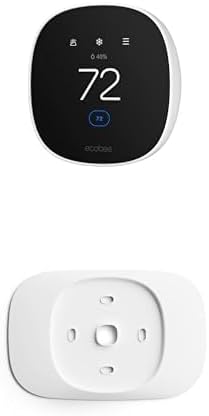
Most popular upgrades chosen by Ecobee Smart Thermostat owners.
As an Amazon Associate we earn from qualifying purchases.
Official Manufacturer Manual
If you need the complete manufacturer documentation for advanced setup, wiring diagrams, or detailed specifications, you can download the official manual below. The manual includes full technical instructions directly from the manufacturer and may help if your issue requires deeper troubleshooting.
Download the Official Ecobee Smart Thermostat ManualSource: ecobee.com
Need More Help? Ecobee Support
Note: The contact information below connects you directly to Ecobee's official customer support team, not Trunetto. They can help with warranty claims, device replacements, and advanced technical issues.
How Does Ecobee Compare?
Before replacing your Ecobee device, see how it stacks up against alternatives in our full comparison guides.
Accessories owners commonly pair with Ecobee Smart Thermostat.

Ring Rechargeable Quick Release Battery Pack
Ring Chime Pro

SwitchBot Hub Mini Smart Remote - IR Universal Remote, Wi...
As an Amazon Associate we earn from qualifying purchases.


