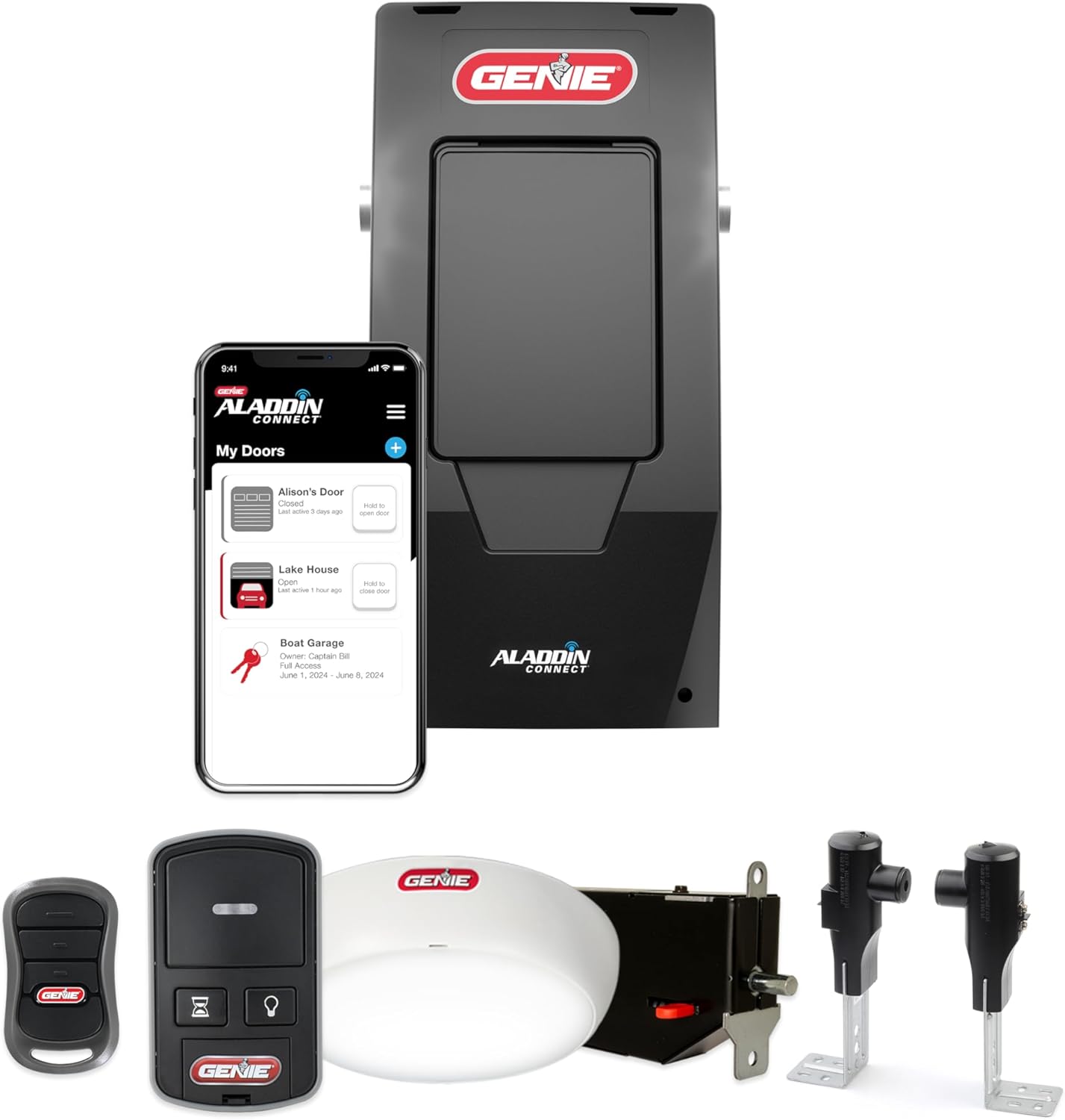

Genie Belt-Drive Opener Jerky or Slipping? Adjust the Tension
- Belt tension too loose, causing slap and slip
- Belt tension too tight, straining the motor
- Belt stretched with age
Problem Description
Your Genie belt-drive opener (SilentMax, StealthDrive, or QuietLift) moves the door jerkily, the belt slips or slaps, or the door shudders as it travels. Belt-drive Genie openers use a reinforced rubber belt along the rail, and a belt that is too loose slaps and slips, while one that is too tight strains the motor. The fix is almost always adjusting the belt tension at the rail.
Why This Happens in Real Homes
A Genie belt-drive opener that runs jerky, slaps the rail, or slips is nearly always a belt-tension problem, and the adjustment is right where the rail meets the header bracket above the door. There the belt runs around a pulley and connects to the trolley through a threaded rod with a tension nut and spring, and turning that nut sets how tight the belt runs. Too loose and the belt sags, slaps, and slips at the start of travel; too tight and it strains the motor and can wear the trolley. The target is a belt that flexes just slightly when you press it midway, with the tension spring compressed to the length your manual gives. Before and after adjusting, check the mounting brackets and the trolley connection for loose hardware, since a rattly bracket mimics a tension problem, and glance at the rollers, because a binding door shows up as jerky belt movement. Always finish with the 2x4 safety-reverse test.
Symptoms
- Belt slaps or vibrates against the rail
- Door movement is jerky or shudders
- Belt looks loose and sags on the rail
- Opener strains and the door moves slowly
- Grinding or slipping sound at start of travel
- Door bounces at the top or bottom of travel
- Belt has come loose at the trolley end
- Noise and jerkiness got worse over time
Recognize these? Here's what usually causes it.
Common Causes
- Belt tension too loose, causing slap and slip
- Belt tension too tight, straining the motor
- Belt stretched with age
- Trolley or belt end bracket hardware loose
- Worn rollers making the door bind
- Belt frayed or damaged
- Rail not level or mounting brackets loose
- Trolley worn on the rail
Most fixes happen in the first 3 steps.
Unplug the opener and release the door before adjusting the belt. Springs and a disconnected door can move suddenly; keep hands clear of the trolley and rollers, and finish with the 2x4 safety test.
Tools & Requirements
These tools will help you complete this fix.
As an Amazon Associate we earn from qualifying purchases.
Step-by-Step Solution
Unplug and Release the Door
Unplug the opener from the ceiling outlet, then pull the red emergency-release cord on the trolley so the door is disconnected while you work on the belt.
Find the Belt Tension Adjustment
At the door end of the rail, where the rail meets the header bracket above the door, the belt loops around a pulley and connects to the trolley through a threaded rod with an adjustment nut and a spring. This nut is how you set belt tension on a Genie belt drive.

Needed for this step
8" Adjustable Wrench,Black Oxide Wrench Fits fo...
This helps complete the fix you are currently reading.
$7.99Check the Current Tension
Press the belt midway along the rail. It should flex slightly but not sag loosely or feel guitar-string tight. A belt that sags and slaps is too loose; a belt with no give and a fully compressed spring is too tight.
Adjust the Tension Nut
Turn the adjustment nut to tighten a loose belt (usually until the tension spring is compressed to the length marked in your manual), or loosen it if the belt is over-tight. Adjust in small increments and re-check the midway flex after each turn.
Tighten the End Hardware
Check the header bracket at the door end and the rail-to-ceiling brackets for loose bolts, and confirm the trolley connection to the belt is secure. Loose mounting hardware adds slap and shudder that no tension setting will cure.
Inspect the Belt and Rollers
Look along the belt for fraying or cracking, and spin the door rollers by hand. A stretched or damaged belt needs replacing, and worn or dry rollers make the door bind, which the opener transmits as jerky belt movement.
Re-Engage and Test
Re-connect the trolley (pull the release toward the opener or run the opener to re-latch), plug the opener back in, and run several full cycles. The door should move smoothly with no slap or slip.
Fine-Tune and Safety Check
If it still slips at start, add a little tension; if the motor strains, back it off slightly. Finish with the 2x4 safety-reverse test to confirm the door still reverses on contact after the mechanical work.
Quick Solutions
Still having issues? This is usually the deeper cause below.
If this comes back after following these steps, check whether a recent app or firmware update reset a default setting — the fix works, but the setting gets reverted silently.
A correctly tensioned belt should flex slightly at the midpoint and the tension spring should sit at the length your manual specifies. Note that length so future checks are quick.
This issue almost always looks more complex than it is — the majority of cases trace back to a single setting, a stale credential, or a default that shipped wrong.
- Belt tension too loose, causing slap and slip
- Belt tension too tight, straining the motor
- Belt stretched with age
- Trolley or belt end bracket hardware loose
- Worn rollers making the door bind
Before you go — try one of these (they fix most cases).
Most popular upgrades chosen by Genie Garage Door Opener owners.

Genie QuietLift Connect Smart Garage Door Opener Bundle w...

Genie StealthDrive 7155 Connect Smartphone-Controlled Bel...

Genie Aladdin Connect Smartphone Garage Door Opener – Mon...
As an Amazon Associate we earn from qualifying purchases.
Official Manufacturer Manual
Genie provides official product documentation through their online manual rather than downloadable PDF. Access setup guides, troubleshooting steps, and product specifications for your Genie Garage Door Opener.
Source: geniecompany.com
Need More Help? Genie Support
Note: The contact information below connects you directly to Genie's official customer support team, not Trunetto. They can help with warranty claims, device replacements, and advanced technical issues.
Accessories owners commonly pair with Genie Garage Door Opener.

As an Amazon Associate we earn from qualifying purchases.