
Genie Garage Door Opener Loud or Vibrating? How to Quiet It
- Dry or worn door rollers and hinges
- Loose nuts and bolts on the door and track
- Chain too loose (chain drive) or belt tension off
Problem Description
Your Genie opener has become loud, rattly, or shakes the ceiling when the door moves. Most opener noise is not the motor itself but the hardware around it: dry or worn rollers, loose bolts on the door and rail, a chain or belt needing attention, or the powerhead transmitting vibration into the framing. Tracking the noise to its source lets you quiet it without replacing the opener.
Why This Happens in Real Homes
A loud Genie opener is rarely the motor; it is the hardware around it, and quieting it is mostly a matter of finding which part is the culprit. Run the door and listen: a squeal or grind on every pass is dry or worn rollers and hinges, a metallic rattle is loose bolts on the door and track that vibration has backed off over the years, a slap on the rail is a loose chain or belt, and a deep drumming that shakes the ceiling is the powerhead transmitting motor vibration straight into the framing. Each has a targeted fix: lubricate the rollers, hinges, and springs; tighten the door and bracket hardware; set the chain or belt tension; and add rubber isolation pads between the opener's hanging brackets and the joists. Swapping tired rollers for good nylon ones is the single biggest noise reduction. Since opener noise is usually a few small things stacked together, work through them and re-test.
Symptoms
- Loud rattling or banging when the door runs
- Ceiling or walls vibrate as the door moves
- Grinding or squealing from the door or rail
- Clunk or bang at the start or end of travel
- Chain slaps or belt vibrates on the rail
- Squeak on every roller as the door travels
- Noise got worse gradually over months
- Metallic rattle from loose hardware
Recognize these? Here's what usually causes it.
Common Causes
- Dry or worn door rollers and hinges
- Loose nuts and bolts on the door and track
- Chain too loose (chain drive) or belt tension off
- Powerhead transmitting vibration into the framing
- Springs dry and squeaking
- Worn trolley or drive components
- Door out of balance
- Loose or worn rail mounting brackets
Most fixes happen in the first 3 steps.
Unplug the opener before lubricating or tightening hardware near the door. Do not spray lubricant inside the tracks, and never adjust or lubricate the torsion spring's mounting hardware yourself; leave spring tension to a professional.
Tools & Requirements
These tools will help you complete this fix.

Socket set or wrenches
Upgraded Watt Meter, Plug-in Socket Power Meter with...

Rubber isolation pads or a vibration-isolation kit
8 Pcs Rubber Isolation Pads Thick Rubber Washers 1.5...
As an Amazon Associate we earn from qualifying purchases.
Step-by-Step Solution
Run the Door and Locate the Noise
Watch and listen as the door cycles. Pin the noise to a source: the door rollers and hinges, the rail and chain/belt, or the powerhead itself. This tells you which fix to apply rather than lubricating everything blindly.
Lubricate the Moving Parts
Unplug the opener, then spray a garage door lubricant on each roller stem, the hinges between panels, and the spring above the door. Wipe the tracks clean but do not grease the inside of the tracks. Dry rollers and hinges are the most common source of squeal and grind.
Tighten the Door and Track Hardware
Vibration loosens bolts over time. Go around the door and tighten the nuts on the hinges, the roller brackets, and the bolts holding the track brackets to the wall and ceiling. A metallic rattle is usually one of these backed off.
Address the Drive on the Rail
On a chain drive, a loose chain slaps the rail; adjust it at the tension nut on the trolley/rail end to the slight sag your manual specifies. On a belt drive, set belt tension the same way. A jumping or over-tight drive is both noisy and hard on the opener.
Isolate the Powerhead From the Framing
A powerhead bolted hard to the joists transmits motor vibration into the whole ceiling. Add rubber isolation pads or a vibration-isolation bracket kit between the opener's hanging brackets and the framing to kill the drumming sound.
Needed for this step
8 Pcs Rubber Isolation Pads Thick Rubber Washer...
This helps complete the fix you are currently reading.
$9.99Check the Rollers and Trolley for Wear
Worn nylon rollers or steel rollers with flat spots grind on every pass; replacing them with good nylon rollers is one of the biggest noise reductions available. Inspect the trolley on the rail too, and replace it if it is worn or sloppy.
Check Door Balance
Pull the release and lift the door by hand. If it is heavy or uneven, it is out of balance and the opener is working hard and noisily to move it. Spring adjustment for balance is a professional job.
Re-Test
Re-engage the trolley, plug in, and run the door. Work through any remaining noise source, since opener noise is often two or three small things stacked, rollers plus loose bolts plus a powerhead drumming on the joists.
Quick Solutions
Still having issues? This is usually the deeper cause below.
If this comes back after following these steps, check whether a recent app or firmware update reset a default setting — the fix works, but the setting gets reverted silently.
A yearly lubrication of rollers, hinges, and springs, plus a hardware tighten, keeps most openers quiet for years. Nylon rollers and a vibration-isolation kit are the two cheapest upgrades with the biggest noise payoff.
This issue almost always looks more complex than it is — the majority of cases trace back to a single setting, a stale credential, or a default that shipped wrong.
- Dry or worn door rollers and hinges
- Loose nuts and bolts on the door and track
- Chain too loose (chain drive) or belt tension off
- Powerhead transmitting vibration into the framing
- Springs dry and squeaking
Before you go — try one of these (they fix most cases).
Most popular upgrades chosen by Genie Garage Door Opener owners.

Genie QuietLift Connect Smart Garage Door Opener Bundle w...

Genie StealthDrive 7155 Connect Smartphone-Controlled Bel...

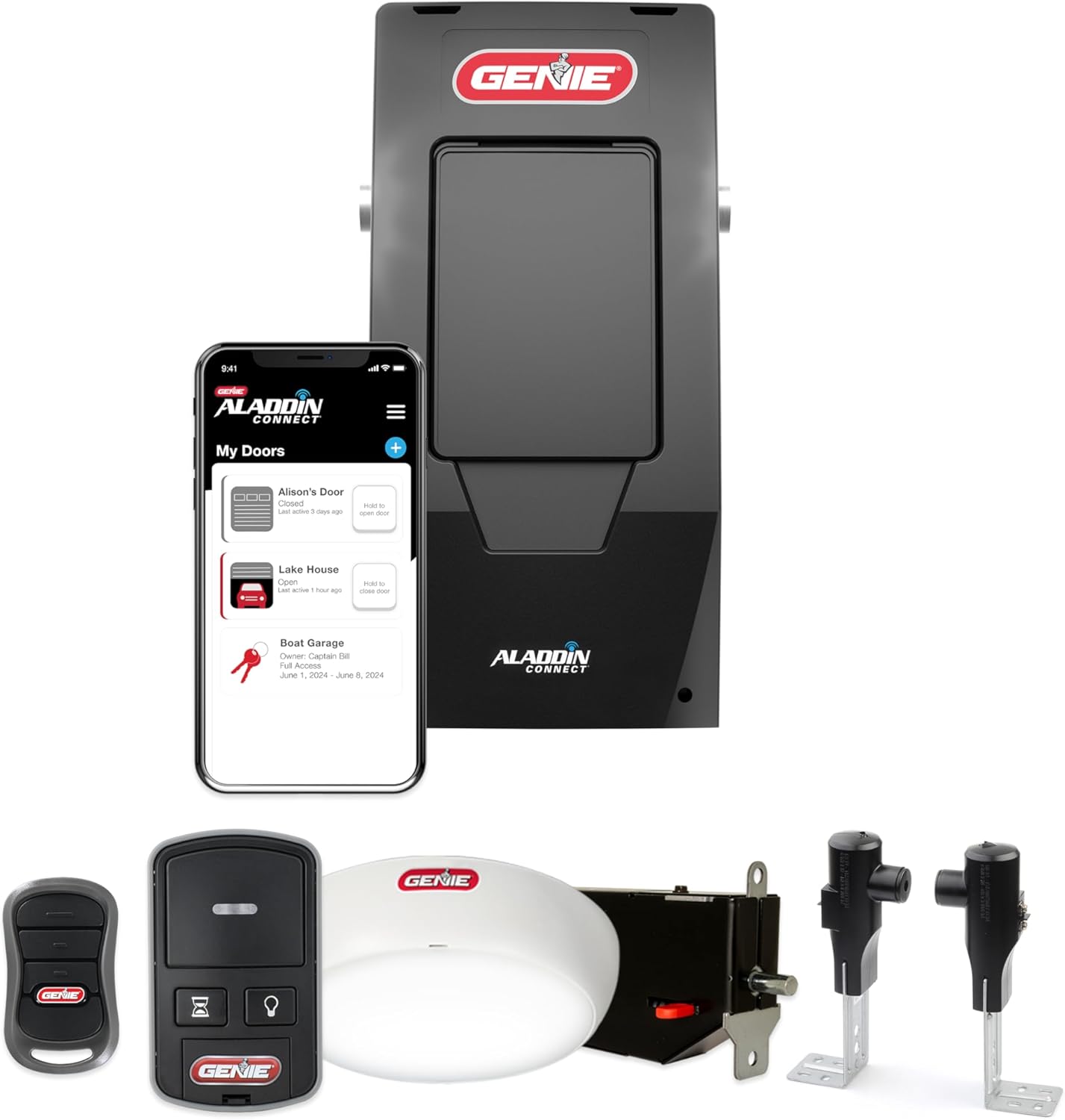
Genie Aladdin Connect Smartphone Garage Door Opener – Mon...
As an Amazon Associate we earn from qualifying purchases.
Official Manufacturer Manual
Genie provides official product documentation through their online manual rather than downloadable PDF. Access setup guides, troubleshooting steps, and product specifications for your Genie Garage Door Opener.
Source: geniecompany.com
Need More Help? Genie Support
Note: The contact information below connects you directly to Genie's official customer support team, not Trunetto. They can help with warranty claims, device replacements, and advanced technical issues.
Accessories owners commonly pair with Genie Garage Door Opener.

As an Amazon Associate we earn from qualifying purchases.