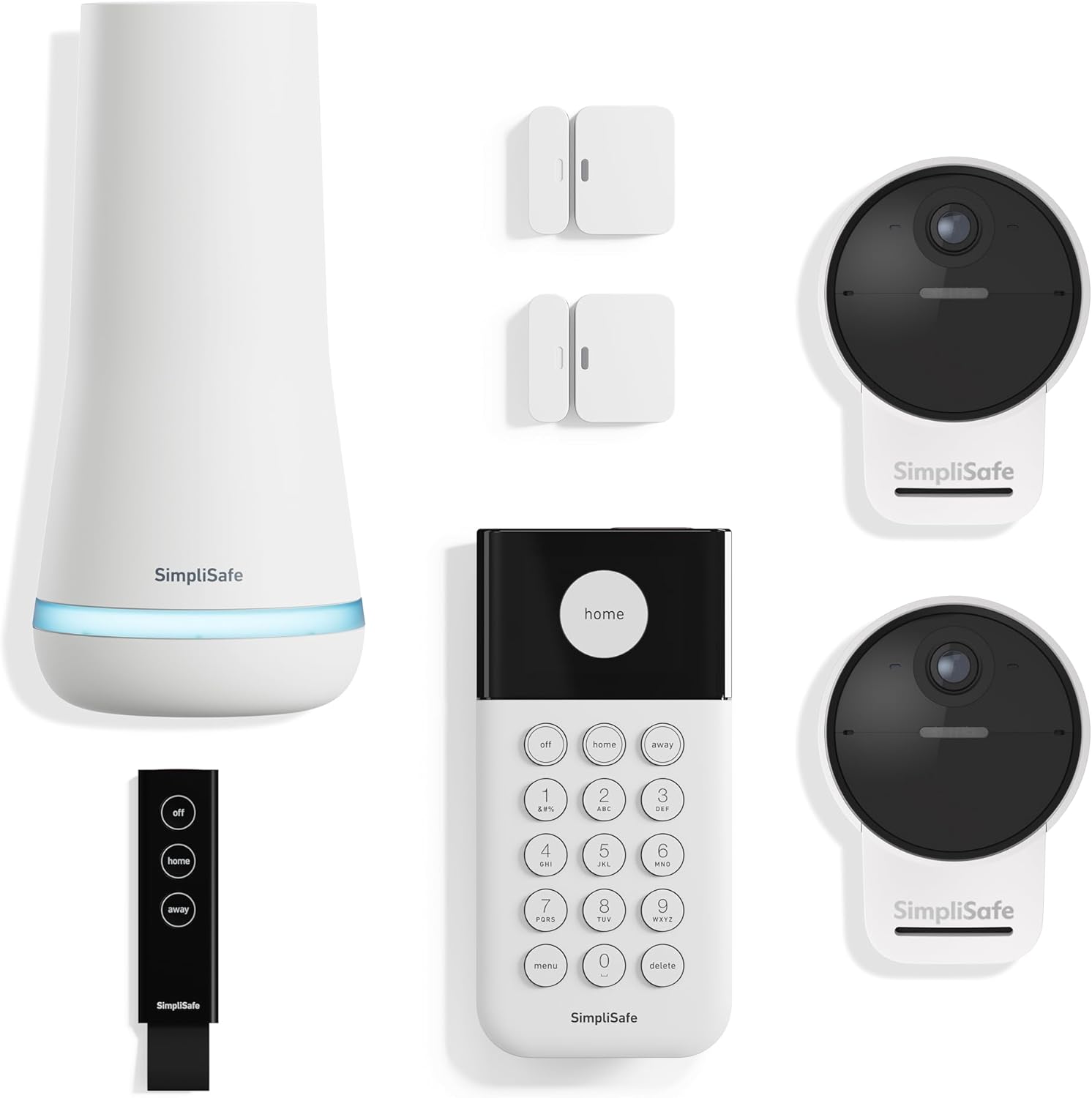

Why Does My SimpliSafe Base Station Keep Losing WiFi Connection
- Router auto-channel switching disconnects base station briefly
- Router firmware update changed WiFi settings
- 2.4GHz band congestion from too many smart home devices
Problem Description
Your SimpliSafe base station keeps disconnecting from WiFi and you get repeated notifications that WiFi was lost and reconnected. The base station announces wireless interference or WiFi disconnected multiple times per day even though it has been in the same spot for years. SimpliSafe support often says to move the base station or replace the cellular module but the real fix is usually a router compatibility issue that they never mention.
Why This Happens in Real Homes
Most SimpliSafe WiFi disconnection issues come from the base station being too far from the router or from dual-band routers that keep pushing it toward 5GHz. A dedicated 2.4GHz SSID fixes the majority of intermittent disconnection cases. Users in apartments with heavy WiFi congestion often see improvement by manually setting their router to a less crowded channel. The Ethernet port on the base station is an underused feature that completely eliminates this problem.
Symptoms
- Base station announces WiFi disconnected then reconnected repeatedly
- SimpliSafe app shows base station offline intermittently
- Wireless interference message plays from base station
- WiFi drops happen multiple times per day at random
- Base station WiFi was fine for years then started dropping
- Cameras go offline when base station loses WiFi
Recognize these? Here's what usually causes it.
Common Causes
- Router auto-channel switching disconnects base station briefly
- Router firmware update changed WiFi settings
- 2.4GHz band congestion from too many smart home devices
- Router band steering pushing base station to 5GHz which it cannot use
- DHCP lease expiration causing reconnection cycle
- Base station WiFi module degrading over time
Most fixes happen in the first 3 steps.
When removing the backup batteries to power cycle the base station, the system will show as offline for the duration. If you have professional monitoring, SimpliSafe may call you about the offline event. Let your monitoring contacts know before you power cycle. Also, do not leave the base station without backup batteries for extended periods — the batteries provide power during outages and are essential for security.
Tools & Requirements
Step-by-Step Solution
Check if it is WiFi or cellular backup disconnecting
The SimpliSafe base station connects to WiFi as the primary internet path, with cellular as backup. In the SimpliSafe app, go to your base station settings and check the connection status. If WiFi shows disconnected but the system still works (alerts come through), it is using cellular backup. The WiFi connection is the one dropping. This is important because the fix is different for WiFi drops versus full offline events.
Move the base station closer to your router
The SimpliSafe base station has a relatively weak WiFi antenna compared to phones and laptops. A signal that is fine for your phone may be too weak for the base station. Move the base station within 20-30 feet of the router with minimal walls between them. Avoid placing it in a closet, behind furniture, or near large metal objects. Check the WiFi signal strength in the app after moving it.
Switch to the 2.4GHz band specifically
SimpliSafe base stations work on 2.4GHz WiFi only. If your router has a combined 2.4/5GHz network, the base station may struggle to connect reliably because the router keeps trying to push devices to 5GHz. Create a separate 2.4GHz SSID on your router and connect the base station to it. This eliminates band-steering issues and provides a more stable connection.
Assign a static IP or DHCP reservation
Some routers aggressively recycle DHCP leases, which can kick the base station offline temporarily during IP renewal. Log into your router admin panel, find the base station in the connected devices list, and create a DHCP reservation so it always gets the same IP address. This prevents the router from reassigning the IP and causing a temporary disconnection that triggers a reconnect cycle.
Check for router firmware updates and channel congestion
Update your router firmware — manufacturers regularly fix WiFi stability bugs. Also check the 2.4GHz channel. If you live in an apartment or dense neighborhood, channels 1, 6, and 11 may all be congested. Use a WiFi analyzer app on your phone to see which channels are least crowded and set your router to that channel manually instead of auto. A less congested channel means fewer disconnections for all 2.4GHz devices.
Power cycle both the base station and router
Unplug the base station power cable, then remove the backup batteries from the back. Wait 30 seconds. Plug the power back in first, then reinsert the batteries. Also restart your router by unplugging it for 30 seconds. Let the router fully boot first, then the base station will reconnect. This clears any stuck network states. Check the app after 5 minutes to confirm WiFi is connected.
Use an Ethernet connection if WiFi remains unreliable
If the base station continues to lose WiFi despite good signal and router configuration, connect it via Ethernet instead. The SimpliSafe base station has an Ethernet port on the back. Run an Ethernet cable from your router to the base station. This provides a rock-solid connection and eliminates all WiFi-related disconnections. Use a powerline adapter if running a cable is not practical.
Quick Solutions
Still having issues? This is usually the deeper cause below.
This usually happens right after a router reboot or ISP change — the device rejoins the network but drops its cloud session silently.
The most reliable setup is base station connected via Ethernet with WiFi as a backup and cellular as a second backup — this gives you three layers of connectivity. If Ethernet is not possible, keep the base station within 20 feet of the router on a dedicated 2.4GHz SSID. The cellular backup means your system still works when WiFi drops, but you will get annoying notifications about the WiFi disconnection.
Most WiFi drop-offs happen right after a router reboot or ISP swap — the device reconnects to the network but silently loses its cloud registration.
- Router auto-channel switching disconnects base station briefly
- Router firmware update changed WiFi settings
- 2.4GHz band congestion from too many smart home devices
- Router band steering pushing base station to 5GHz
- DHCP lease expiration causing reconnection cycle
Before you go — try one of these (they fix most cases).
Most popular upgrades chosen by SimpliSafe Base Station owners.

SimpliSafe Wireless Keypad - Touch-to-Wake Technology - C...

SimpliSafe Wireless Outdoor Security Camera (Renewed)
SimpliSafe Entry Sensor - Window and Door Protection - Co...
As an Amazon Associate we earn from qualifying purchases.
Official Manufacturer Manual
If you need the complete manufacturer documentation for advanced setup, wiring diagrams, or detailed specifications, you can download the official manual below. The manual includes full technical instructions directly from the manufacturer and may help if your issue requires deeper troubleshooting.
Download the Official SimpliSafe Base Station ManualSource: simplisafe.com
Need More Help? SimpliSafe Support
Note: The contact information below connects you directly to SimpliSafe's official customer support team, not Trunetto. They can help with warranty claims, device replacements, and advanced technical issues.
How Does SimpliSafe Compare?
Before replacing your SimpliSafe device, see how it stacks up against alternatives in our full comparison guides.
Accessories owners commonly pair with SimpliSafe Base Station.

SimpliSafe 12 Piece Wireless Home Security System w/HD Ca...

SimpliSafe 11 Piece Wireless Home Security System Gen 3 w...

SimpliSafe Smart Alarm Wireless Indoor Security Camera
As an Amazon Associate we earn from qualifying purchases.
Guide Improvements
- Updated June 16, 2026
Added 2.4GHz dedicated SSID fix, static IP reservation, channel congestion diagnostics, and Ethernet port alternative.
What changed:- Added dedicated 2.4GHz SSID as primary fix
- Added static IP / DHCP reservation setup
- Added WiFi channel congestion diagnostics
- Added Ethernet port alternative for permanent fix
- Added real-world context about signal strength requirements
Source: Trunetto editorial update