

Segway Navimow GPS Signal Lost or Position Drifting
- GNSS reference antenna placed too low or near a wall with blocked sky view
- Dense tree canopy above the mowing area blocking satellite signals
- Metal structures like carports, sheds, or solar panels causing signal reflection
Problem Description
Your Segway Navimow robot mower is reporting GPS signal lost, showing inaccurate positioning, or drifting outside its mapped boundary during mowing. The Navimow uses RTK GPS with a GNSS reference antenna for centimeter-level accuracy. When the GPS signal degrades, the mower stops mowing and returns to the dock, or continues with poor accuracy and crosses the boundary. Position drifting — where the mower dot in the app slowly shifts from its actual location — indicates the RTK correction link is unstable.
Why This Happens in Real Homes
Antenna placement is the answer to about 75 percent of Navimow GPS problems. Users put the antenna where it is convenient — on the porch railing, clipped to the gutter, on a low table — and get Float or Standalone status. Moving it to a pole in the open yard with clear sky fixes it almost every time. The second most common cause is cable damage from lawn mowers, trimmers, or animals. If GPS was working fine and suddenly degrades without any antenna movement, check the cable first.
Symptoms
- Navimow stops and displays GPS signal weak or lost in the app
- Mower position in the app does not match where the mower actually is on the lawn
- RTK status shows Float or Standalone instead of Fixed in the app
- Mowing lines are crooked or overlapping instead of straight parallel strips
- GPS works fine in one area of the lawn but drops out in another
- Signal was stable previously but degraded after a firmware update or antenna move
Recognize these? Here's what usually causes it.
Common Causes
- GNSS reference antenna placed too low or near a wall with blocked sky view
- Dense tree canopy above the mowing area blocking satellite signals
- Metal structures like carports, sheds, or solar panels causing signal reflection
- Reference antenna cable damaged or connector corroded from weather exposure
- Reference antenna too far from the mowing area for reliable correction data
- Firmware update altered the GPS receiver configuration or offset calibration
Most fixes happen in the first 3 steps.
Do not mow near roads, pools, ponds, or drop-offs when GPS accuracy is degraded. The Navimow relies on GPS for all boundary enforcement — there is no physical wire backup. If the mower crosses the boundary due to poor GPS, it will continue into unsafe areas with blades spinning until the error is detected. Always verify Fixed status before starting a session near hazards, and add physical barriers at any high-risk boundary edge.
Step-by-Step Solution
Inspect the GNSS reference antenna position
The Navimow GNSS antenna must have a clear, unobstructed view of the sky in every direction. It should be mounted at least 1.5 meters high — the included mounting pole is designed for this. Check that no roof eaves, walls, tree branches, or structures are within 2 meters overhead or to the sides. The antenna needs to see as many satellites as possible simultaneously. Even partial obstruction from one direction reduces accuracy from centimeters to decimeters.
Check for multipath interference sources
Metal surfaces near the antenna reflect satellite signals and create false readings called multipath interference. Common culprits are metal roofs, solar panel frames, metal fences, parked cars, and garden sheds with metal siding. Mount the antenna at least 3 meters away from any large metal surface. If the antenna is on a metal fence post, add a ground plane (a flat metal disc under the antenna) to block reflections from below.
Verify RTK status in the Navimow app
Open the Navimow app and check the positioning status indicator. Fixed means full centimeter-level accuracy — this is what you need. Float means the correction link is working but has not achieved a full lock — accuracy is 10 to 50 centimeters. Standalone means no correction at all and the mower is using raw GPS with meter-level accuracy. If you consistently get Float instead of Fixed, the antenna position needs improvement. It can take 5 to 15 minutes after power-on for the system to achieve Fixed status.
Check the antenna cable and connections
The coaxial cable between the GNSS antenna and the base station is exposed to weather, UV, lawn equipment, and animals. Inspect the full length of the cable for cuts, kinks, or compression. Check both connectors — unscrew them, look for corrosion, bent center pins, or water intrusion, and reconnect firmly. A damaged cable causes intermittent signal drops that are hard to diagnose because they come and go with temperature and flexing.
Test GPS accuracy across the lawn
Start the mower and use the app to track its position as it moves across different parts of the lawn. If GPS is accurate in the open center but drops under trees or near the house, the issue is localized obstruction — not the antenna. Exclude those areas from the mowing boundary or trim overhanging branches to improve sky visibility. If accuracy is poor everywhere, the antenna placement or cable is the problem.
Update firmware and remap
Check for firmware updates in the Navimow app for both the mower and the reference station. GPS module updates often include improved satellite tracking and noise filtering. After updating, and after any antenna relocation, delete the existing boundary map and create a new one. The boundary coordinates are tied to the reference antenna position — if the antenna moved, the old map is offset and needs to be recreated from the new reference point.
Quick Solutions
Still having issues? This is usually the deeper cause below.
If this comes back after following these steps, check whether a recent app or firmware update reset a default setting — the fix works, but the setting gets reverted silently.
The number one GPS fix is antenna placement. Spend 15 minutes finding the best spot before troubleshooting anything else. The ideal location is a pole in the open yard — away from the house, trees, and metal. If your yard has a central area with clear sky, that is the spot. The i Series antenna cable is about 10 meters long, which limits placement options. The H Series has a longer cable for larger properties. Check the satellite count in the app — you want 15 or more for reliable Fixed status. The Navimow user manual at https://www.segway.com/navimow-support covers reference antenna installation, RTK and EFLS configuration, satellite requirements, and the difference between EFLS-only and RTK+EFLS modes. The Navimow FAQ at https://www.segway.com/navimow-faq has GPS troubleshooting steps specific to the H-Series and i-Series.
This issue almost always looks more complex than it is — the majority of cases trace back to a single setting, a stale credential, or a default that shipped wrong.
- GNSS reference antenna placed too low or near a
- Dense tree canopy above the mowing area
- Metal structures like carports, sheds, or solar panels
- Reference antenna cable damaged or connector corroded from weather
- Reference antenna too far from the mowing area for
Before you go — try one of these (they fix most cases).
Official Manufacturer Manual
Segway Navimow provides official product documentation through their online manual rather than downloadable PDF. Access setup guides, troubleshooting steps, and product specifications for your Segway Navimow Robot Mower.
Source: support.segway.com
Need More Help? Segway Navimow Support
Note: The contact information below connects you directly to Segway Navimow's official customer support team, not Trunetto. They can help with warranty claims, device replacements, and advanced technical issues.
Accessories owners commonly pair with Segway Navimow Robot Mower.

Blink Mini - Compact indoor plug-in smart security camera...
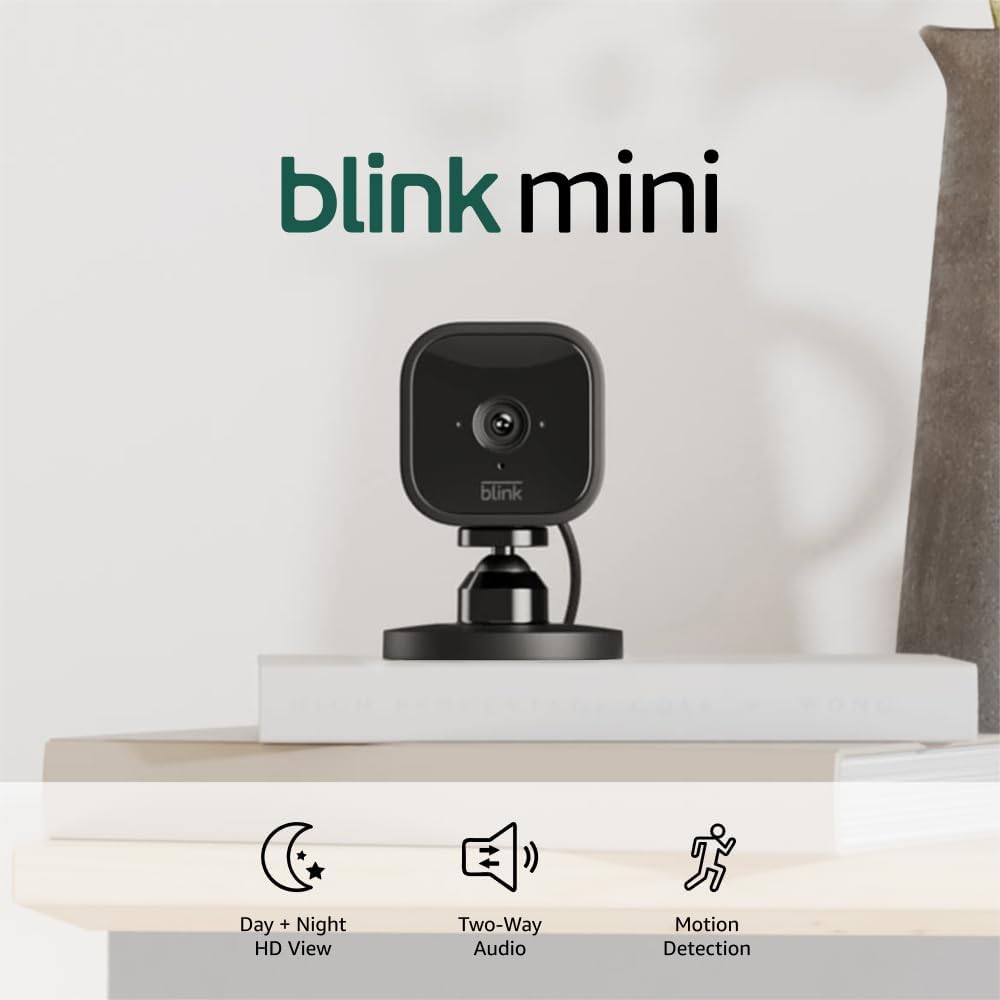
Blink Mini - Compact indoor plug-in smart security camera...
Blink Mini - Compact indoor plug-in smart security camera...
As an Amazon Associate we earn from qualifying purchases.