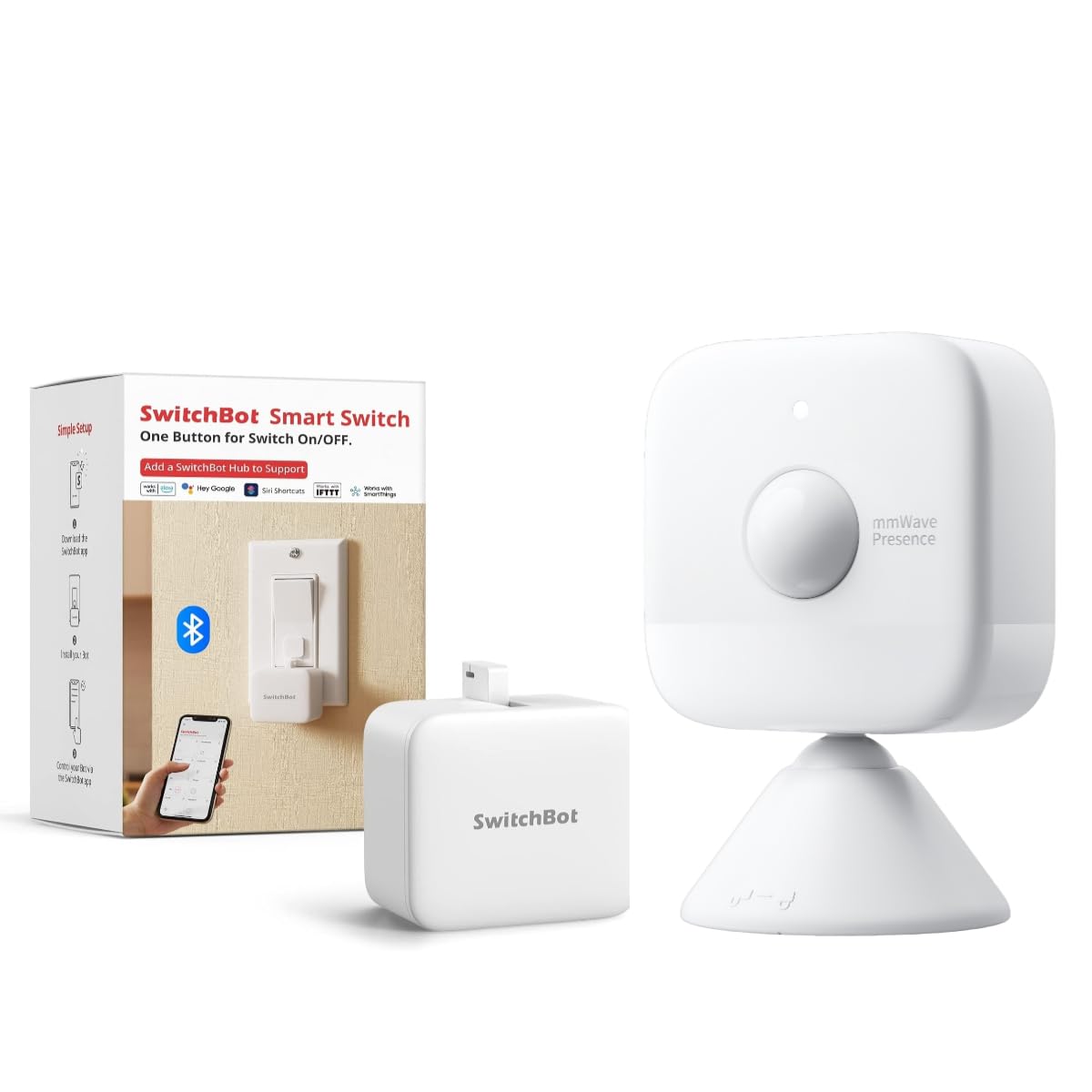

SwitchBot Motion or Contact Sensor Not Triggering Automations
- No Hub online (cloud automations need it)
- Hub offline or on weak WiFi
- Sensor out of Bluetooth range of the Hub
Problem Description
Your SwitchBot motion or contact sensor records trigger events in the app activity log but the linked automation does not execute. Or the sensor stops detecting events entirely. When the sensor logs events but automations do not fire, the failure is almost always in the automation condition logic or a cloud sync delay — not the sensor hardware itself.
Why This Happens in Real Homes
SwitchBot motion and contact sensors detect events over Bluetooth, but automations that act on them — especially anything crossing devices or running while you're away — need a SwitchBot Hub online to relay to the cloud. So a sensor that clearly logs triggers but never fires an automation is usually missing that Hub, or the Hub can't reach the sensor.
Make sure a Hub is online with strong 2.4GHz WiFi and the sensor is within Bluetooth range of it, then check the automation's conditions aren't too narrow (a time window or condition that rarely matches) and that the target device is online. Fresh sensor batteries and current firmware on both the sensor and Hub clear the remaining causes of missed automations.
Symptoms
- Sensor detects but automations don't run
- Events logged but no action
- Automation never fires
- Works locally not in cloud automations
- Delayed triggers
- Only some automations run
- Trigger works, linked device doesn't
- Intermittent automation
Recognize these? Here's what usually causes it.
Common Causes
- No Hub online (cloud automations need it)
- Hub offline or on weak WiFi
- Sensor out of Bluetooth range of the Hub
- Automation conditions/schedule too narrow
- Target device offline or unreachable
- Low sensor battery
- Automation set up incorrectly
- Firmware out of date
Most fixes happen in the first 3 steps.
{"Motion sensors have a 30-second cooldown between detections by default","Contact sensor adhesive may damage paint on door frames when removed"}
Tools & Requirements
These tools will help you complete this fix.

Isopropyl alcohol for remounting
ForPro Professional Collection 99% Isopropyl Alcohol...

CR2 or AAA batteries depending on model
Duracell 2032 Lithium Battery, 9 Count (Pack of 1), ...
As an Amazon Associate we earn from qualifying purchases.
Step-by-Step Solution
Check if the SwitchBot Hub is online
SwitchBot motion and contact sensors communicate with the Hub via Bluetooth, and the Hub connects to WiFi for cloud automations. If the Hub is offline, cloud-based automations (Alexa routines, Google Home, IFTTT) will not trigger. In the SwitchBot app, check the Hub status — it should show online with a green indicator. If the Hub is offline, power cycle it by unplugging for 10 seconds. Local automations (SwitchBot Scene automations set to run locally on the Hub) still work without internet but require the Hub to be powered on.
Check the sensor battery level
SwitchBot motion sensors use a CR2450 battery and contact sensors use a CR2 battery. When the battery is low, the sensor reduces its transmission frequency to conserve power, which causes missed triggers or delayed automations. In the SwitchBot app, tap the sensor and check the battery percentage. Below 20%, replace the battery. After replacing, close and reopen the app — the battery level updates after the next sensor report. If the sensor shows 0% but still triggers occasionally, the battery is critically low and should be replaced immediately.
Check the automation trigger conditions
In the SwitchBot app, go to Scenes (or Automations) and tap the automation that is not triggering. Check the trigger condition: is it set to Motion Detected or specific conditions like Motion Detected + time range? If you have a time condition (only between 6 PM and 6 AM), the automation will not trigger outside those hours. Also check if the automation has an If condition like Only when Home or Only when Away — the SwitchBot app uses your phone location for this, and if geofencing is inaccurate, the condition may never be met.
Check the sensor detection range and placement
The SwitchBot motion sensor has a 110-degree detection angle and a range of about 30 feet. If the sensor is mounted too high, too low, or pointing at the wrong direction, it misses motion. Mount it at about 7 feet high, angled slightly downward. The contact sensor has two parts — the sensor and the magnet. They must be within 0.8 inches (20mm) of each other when the door or window is closed. If the gap is too large, the sensor reads as permanently open and never triggers a close event. Check the gap with the door or window fully closed.
Remove and re-add the sensor if it stops responding
If a sensor shows in the app but never triggers (no recent events in the event log), the Bluetooth connection between the sensor and the Hub may be stale. Delete the sensor from the SwitchBot app: tap the sensor, go to Settings, and tap Delete. Then add it back: tap + on the home screen, select the sensor type, and follow the pairing steps (usually hold the button on the sensor for 3 seconds). After re-pairing, re-create your automations that used the sensor — they are not preserved when you delete and re-add.
Quick Solutions
Still having issues? This is usually the deeper cause below.
If the sensor still misses events after repositioning, check whether a scheduled 'home' or 'away' mode is overriding the sensitivity setting silently.
{"Cloud automations require a Hub — Bluetooth-only scenes only work when phone is nearby","Replace sensor batteries annually even if they still show charge","Test each automation after creating it to verify it triggers correctly"}
Home Assistant issues that only appear after restart are a well-known quirk — triggers that require prior state history simply can't fire until that history rebuilds.
- No Hub online (cloud automations need it)
- Hub offline or on weak WiFi
- Sensor out of Bluetooth range of the Hub
- Automation conditions/schedule too narrow
- Target device offline or unreachable
Before you go — try one of these (they fix most cases).
Most popular upgrades chosen by SwitchBot Motion Sensor / Contact Sensor owners.

SwitchBot Thermometer Hygrometer, Bluetooth Indoor Humidi...

SwitchBot Thermometer Hygrometer, Bluetooth Indoor Humidi...

SwitchBot Meter Pro, Digital Hygrometer & Thermometer - W...
As an Amazon Associate we earn from qualifying purchases.
Official Manufacturer Manual
SwitchBot provides official product documentation through their online manual rather than downloadable PDF. Access setup guides, troubleshooting steps, and product specifications for your SwitchBot Motion Sensor / Contact Sensor.
Source: support.switch-bot.com
Need More Help? SwitchBot Support
Note: The contact information below connects you directly to SwitchBot's official customer support team, not Trunetto. They can help with warranty claims, device replacements, and advanced technical issues.
Accessories owners commonly pair with SwitchBot Motion Sensor / Contact Sensor.

SwitchBot WiFi Hygrometer Thermometer with Hub, Dewpoint/...

SwitchBot Hub 2 (2nd Gen), work as a WiFi Thermometer Hyg...

SwitchBot Meter Pro, Digital Hygrometer & Thermometer - W...
As an Amazon Associate we earn from qualifying purchases.