

Why Does My Nanoleaf Rhythm Module React to Background Noise Instead of My Music?
- Rhythm mic sensitivity too high
- Mic picking up ambient room noise
- No music playing but noise present
Problem Description
Your Nanoleaf Rhythm module is syncing to audio but reacting to ambient background sounds such as conversation, HVAC noise, traffic, or general household sounds rather than specifically reacting to the beat of your music. The panels flash randomly during quiet moments or respond more to bass from a distant source than to your actual music. This is distinct from the Rhythm not syncing at all. The module sensitivity is set so high that it cannot distinguish between ambient noise and intentional music.
Why This Happens in Real Homes
The Nanoleaf Rhythm module syncs lights to sound through a microphone, so by nature it reacts to any noise the mic hears — conversation, the TV, or household sounds — not just music. When it's triggering on background noise, the mic sensitivity is too high or the room is simply noisy without music playing.
Lower the Rhythm mic sensitivity in the app, and for the cleanest sync use the module's aux/line-in input instead of the mic so it reacts only to the actual audio source. Place the module away from noise sources, play music above the ambient level, and turn off the rhythm scene when you're not playing music. Line-in is the reliable fix if ambient noise keeps setting it off.
Symptoms
- Rhythm reacts to background noise
- Triggers on talking/ambient sound
- Reacts without music
- Too sensitive to noise
- Flickers with random sounds
- Syncs to the wrong audio
- Reacts to TV/conversation
- Noise-triggered effects
Recognize these? Here's what usually causes it.
Common Causes
- Rhythm mic sensitivity too high
- Mic picking up ambient room noise
- No music playing but noise present
- Mic mode instead of line-in/aux
- Placement near noise sources
- Firmware out of date
- Ambient noise louder than intended audio
- Scene reacting to all sound
Most fixes happen in the first 3 steps.
Do not set Rhythm sensitivity above 80 percent in rooms with people talking. At maximum sensitivity the module reacts to speech phonemes and creates a distracting strobing effect that can be uncomfortable for some people.
Tools & Requirements
These tools will help you complete this fix.
As an Amazon Associate we earn from qualifying purchases.
Step-by-Step Solution
Reduce Sensitivity to 30 to 40 Percent
Open the Nanoleaf app and tap the panel group then tap the Rhythm scene. Look for the Sensitivity slider and reduce it to between 30 and 40 percent. At this level the module requires a significantly louder sound than ambient room noise to trigger. Run a test by playing music at your normal listening volume. The panels should react to the music beat while remaining still during normal conversation or HVAC sounds. Increase sensitivity in 5 percent increments if the panels stop reacting to your music at 30 percent.

Needed for this step
9 Inch Torpedo Level Magnetic, Shock-Proof Smal...
This helps complete the fix you are currently reading.
$6.99Switch to Beat Mode
In the Nanoleaf app tap the Rhythm scene settings and change the reaction mode from Sound to Beat. Beat mode uses a peak detection algorithm that only triggers panel changes when an audio transient exceeds the background noise floor by a significant margin. Continuous ambient sounds like conversation and HVAC have no sharp transients and do not trigger Beat mode. Sound mode reacts to continuous audio energy which is why it triggers from all ambient sources. Beat mode is the correct setting for music-reactive use.
Orient the Rhythm Module Toward Your Speakers
The Rhythm module contains a directional microphone. The panels in your Nanoleaf installation that have the Rhythm module attached should be positioned so the module faces toward your music source. If the installation is on a wall behind your seating position and your speakers are in front of you the module microphone points away from the music and picks up room noise instead. Rearrange the panel layout so the Rhythm module panel is on the side of the installation closest to your primary speaker.
Increase Music Volume Relative to Room Noise
The Rhythm module cannot distinguish music from noise electronically — it responds to acoustic energy. The only way to make it respond primarily to music is to make sure the music is significantly louder than the background noise at the module's location. Play music at least 10 dB louder than the ambient noise level at the panel location. If background noise in your room is consistently loud such as from an open window or loud HVAC system consider using a secondary Bluetooth speaker placed near the Nanoleaf panels to put music physically close to the microphone.
Choose a Beat-Reactive Scene
In the Nanoleaf app scenes library select a scene tagged as Beat Reactive or Rhythm. These scenes are designed to change in discrete steps triggered by beat peaks rather than continuously morphing with ambient audio energy. Continuously morphing Rhythm scenes respond to the running average of all sound energy and appear to react to background noise even at lower sensitivity. A beat-reactive scene changes state only when a sharp audio peak is detected making it appear more selective about what it responds to at the same sensitivity level.
Quick Solutions
Still having issues? This is usually the deeper cause below.
If this comes back after following these steps, check whether a recent app or firmware update reset a default setting — the fix works, but the setting gets reverted silently.
Place the Nanoleaf panels near a bookshelf or surround speaker rather than behind a TV to maximise the microphone proximity to music while minimising TV dialogue triggering.
Microphone sensitivity is almost always too high out of the box — the level that works in a quiet demo room doesn't survive a real living room.
- Rhythm mic sensitivity too high
- Mic picking up ambient room noise
- No music playing but noise present
- Mic mode instead of line-in/aux
- Placement near noise sources
Before you go — try one of these (they fix most cases).
Most popular upgrades chosen by Nanoleaf Rhythm Module owners.

Nanoleaf Lines LED Wall Lights, RGBW Smart Geometry Wall ...

Nanoleaf Essentials LED Rope Light, Smart Neon Rope Light...
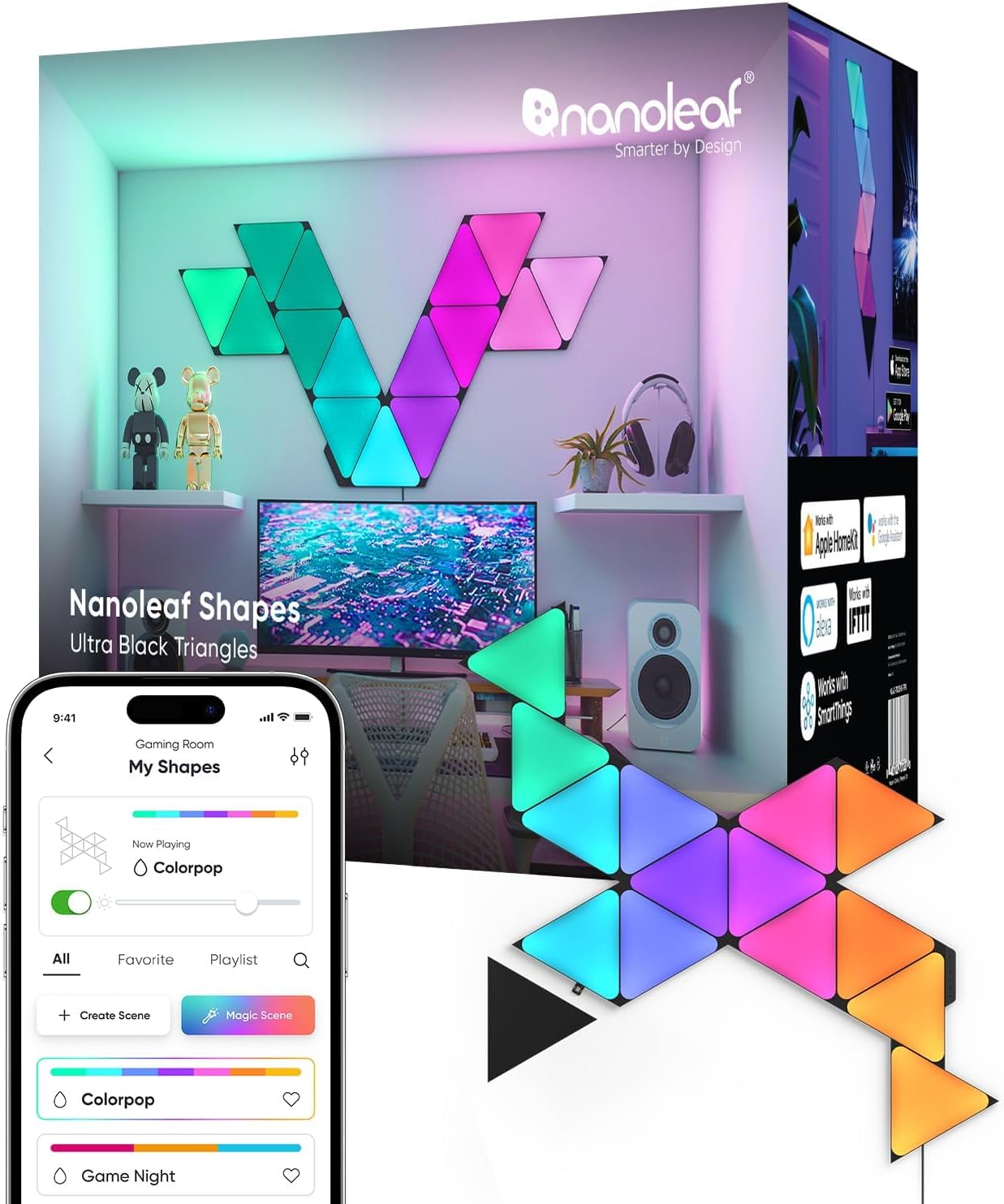
Nanoleaf Shapes WiFi and Thread Smart RGBW 16M+ Color LED...
As an Amazon Associate we earn from qualifying purchases.
Official Manufacturer Manual
Nanoleaf provides official product documentation through their online manual rather than downloadable PDF. Access setup guides, troubleshooting steps, and product specifications for your Nanoleaf Rhythm Module.
Source: nanoleaf.me
Need More Help? Nanoleaf Support
Note: The contact information below connects you directly to Nanoleaf's official customer support team, not Trunetto. They can help with warranty claims, device replacements, and advanced technical issues.
How Does Nanoleaf Compare?
Before replacing your Nanoleaf device, see how it stacks up against alternatives in our full comparison guides.


