
Why Is My Amazon Echo Show Touch Screen Laggy?
- Background processes consuming the processor
- Smudges/moisture on the screen
- Software glitch needing a reboot
Problem Description
Your Echo Show's touchscreen is laggy — taps are slow to register or the interface stutters. This is usually resource pressure (background processes, a busy device) or a smudged screen rather than failing hardware, and a reboot plus cleaning fixes most of it.
Why This Happens in Real Homes
Touch lag on an Echo Show is usually the device being busy rather than the screen failing — background processes, a heavy widget dashboard, or content loading over weak WiFi make taps feel slow, and a dirty screen adds missed touches.
Start by rebooting to clear background load and wiping the screen clean of oil and moisture (capacitive touch hates both). Trim the widget dashboard, improve WiFi so content loads promptly, and keep firmware current; if it only lags when hot, better ventilation stops the throttling.
Symptoms
- Taps slow to register
- Interface stutters
- Delay after touching
- Lag during video/photos
- Sluggish scrolling
- Worse over time until reboot
- Lag with many widgets
- Touch response inconsistent
Recognize these? Here's what usually causes it.
Common Causes
- Background processes consuming the processor
- Smudges/moisture on the screen
- Software glitch needing a reboot
- Too many widgets/skills running
- Weak WiFi making content load slowly
- Overheating
- Storage/memory pressure
- Firmware out of date
Most fixes happen in the first 3 steps.
Smart displays have always-on microphones and cameras. Use the physical camera shutter when privacy is needed. Review your voice and video call history periodically in the app privacy settings. Keep the display away from steam and grease which damage the screen.
Tools & Requirements
Step-by-Step Solution
Restart the Echo Show
Touch lag is often caused by background processes consuming the processor. Say "Alexa, restart" or unplug the device for 30 seconds and plug it back in. After reboot, test the touchscreen responsiveness by swiping between screens and opening settings. If the lag disappears after restart but returns after a few hours or days, the device is running into memory pressure from accumulated background tasks.
Reduce active widgets and skills
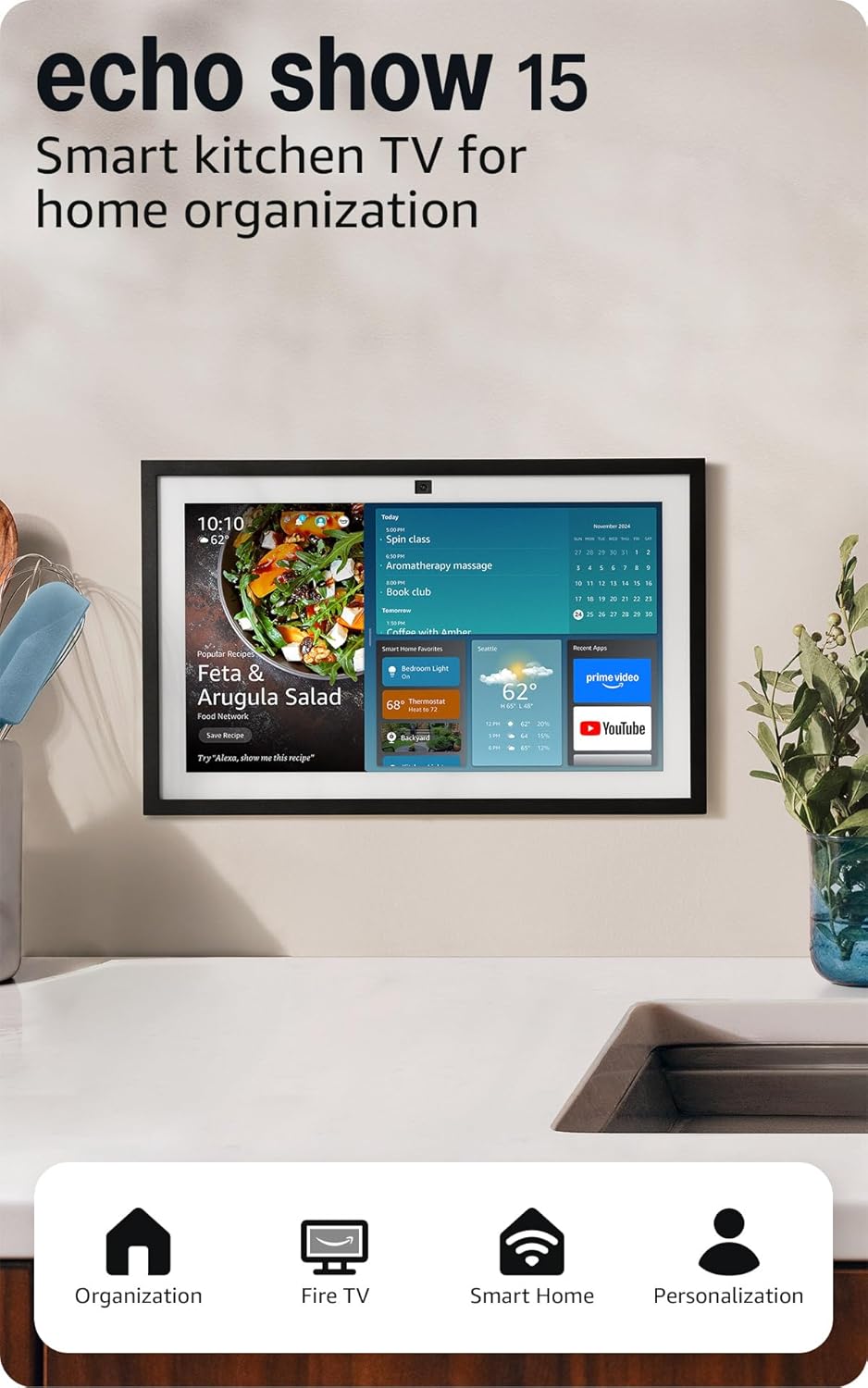
Each widget on the home screen polls for data periodically, and too many of them strain the processor. On the Echo Show 15, which supports the most widgets, press and hold the home screen, enter edit mode, and remove widgets you rarely use. Keep it to 4-6 essential widgets. Also disable any third-party Alexa skills you installed but do not use — some skills run background services that consume memory. Go to More > Skills & Games > Your Skills to review and disable unused ones.
Close active media streams
If you have a camera feed, video stream, or music playing in the background, the processor dedicates resources to decoding that media. Touch input gets deprioritised. Say "Alexa, stop" to end any active media. If you are viewing a Ring or Nest camera feed, exit back to the home screen before expecting responsive touch input. The Echo Show is not powerful enough to decode HD video and respond to rapid touch gestures simultaneously.
Check for software updates
Amazon releases performance improvements in firmware updates. Swipe down from the top of the screen, tap Settings > Device Options > Check for Software Updates. If an update is available, install it and restart. Some Echo Show models have had specific firmware versions with known touch lag bugs that were fixed in subsequent updates. After updating, the device may run slowly for 10-15 minutes while it re-indexes — give it time before testing.
Factory reset if lag persists
If touch lag continues after removing widgets, closing media, and updating software, a factory reset clears corrupted data and cache. Go to Settings > Device Options > Reset to Factory Defaults. Set the device up fresh through the Alexa app. Add widgets back one at a time and test responsiveness after each addition to identify if a specific widget or skill was causing the lag. If the device is still laggy after a clean factory reset with no extra widgets, the hardware may be aging — the Echo Show 5 and 8 have less powerful processors than the Show 15.
Quick Solutions
Still having issues? This is usually the deeper cause below.
If this comes back after following these steps, check whether a recent app or firmware update reset a default setting — the fix works, but the setting gets reverted silently.
Use Do Not Disturb mode or set a nighttime schedule so the display dims automatically and stops announcements during sleeping hours. Place it where you can see the screen from across the room for at-a-glance weather, time, and calendar.
This issue almost always looks more complex than it is — the majority of cases trace back to a single setting, a stale credential, or a default that shipped wrong.
- Background processes consuming the processor
- Smudges/moisture on the screen
- Software glitch needing a reboot
- Too many widgets/skills running
- Weak WiFi making content load slowly
Before you go — try one of these (they fix most cases).
Official Manufacturer Manual
Amazon provides official product documentation through their online manual rather than downloadable PDF. Access setup guides, troubleshooting steps, and product specifications for your Amazon Echo Show 15.
Source: amazon.com
Need More Help? Amazon Support
Note: The contact information below connects you directly to Amazon's official customer support team, not Trunetto. They can help with warranty claims, device replacements, and advanced technical issues.
How Does Amazon Compare?
Before replacing your Amazon device, see how it stacks up against alternatives in our full comparison guides.
Accessories owners commonly pair with Amazon Echo Show 15.

Amazon Basics 65 Piece Home Repair Tool Kit Set With Carr...

Amazon Basics Smart Plug, Matter Compatible, Compatible w...

Amazon Basics Dual Smart Plug with Motion Sensor and Nigh...
As an Amazon Associate we earn from qualifying purchases.