

Why Is My Nest Doorbell Constantly Buffering or Showing Poor Quality Video?
- Home internet upload speed is below the 2 Mbps minimum required for Nest Doorbell
- WiFi signal between doorbell and router is weak due to walls or distance
- Router bandwidth is saturated by other devices streaming or downloading
Problem Description
Your Nest Doorbell live view constantly buffers, shows extremely low quality pixelated video, or takes 10 or more seconds to start streaming. Event recordings are blurry or choppy. This is primarily caused by insufficient upload bandwidth on your home internet connection since Nest cameras stream video upstream to Google cloud servers. A slow or congested WiFi connection between the doorbell and router also degrades quality. Users on Reddit report this is the number one ongoing complaint with Nest Doorbell especially the battery model.
Why This Happens in Real Homes
Constant buffering on a Nest Doorbell is a bandwidth problem: upload below the roughly 2 Mbps minimum, weak WiFi at the door, or the network saturated by other devices. In real homes the doorbell sits far from the router behind exterior walls. Improve WiFi at the door, confirm at least 2 Mbps up, and reduce competing traffic.
Symptoms
- Live view takes 10 to 15 seconds to load and often shows low resolution first
- Video is pixelated and blocky especially during motion events
- Live stream freezes every few seconds then catches up in bursts
- Night vision footage is significantly worse quality than daytime
- Event recordings in the timeline are choppy or have missing frames
- Two-way audio has significant delay making conversation difficult
Recognize these? Here's what usually causes it.
Common Causes
- Home internet upload speed is below the 2 Mbps minimum required for Nest Doorbell
- WiFi signal between doorbell and router is weak due to walls or distance
- Router bandwidth is saturated by other devices streaming or downloading
- Nest Doorbell battery model reduces quality to conserve battery when not plugged in
- 2.4GHz WiFi channel congestion from neighboring networks degrading throughput
- Router QoS settings not prioritizing the Nest Doorbell traffic
Most fixes happen in the first 3 steps.
Reducing the video quality setting in the Google Home app will reduce buffering but also reduces the detail captured in recordings. Faces and license plates may not be identifiable at lower quality. Only reduce quality as a last resort if bandwidth upgrades are not possible.
Tools & Requirements
These tools will help you complete this fix.
As an Amazon Associate we earn from qualifying purchases.
Step-by-Step Solution
Check Your Internet Upload Speed
Run a speed test at speedtest.net from a device connected to the same WiFi network as the doorbell. Nest Doorbell needs at least 2 Mbps upload for standard quality and 4 Mbps for high quality. If your upload is below 2 Mbps contact your ISP to upgrade. Many basic internet plans have upload speeds of only 1 to 5 Mbps which is marginal for video streaming especially if multiple cameras share the connection.
Check WiFi Signal Strength at the Doorbell
Open the Google Home app tap the doorbell device then tap the gear icon and look for WiFi signal information. Signal should be above negative 60 dBm. If weaker than negative 65 dBm the connection is too weak for reliable video. Solutions include adding a WiFi extender or mesh node near the front door, upgrading to a router with better range, or running an Ethernet cable to a nearby access point.
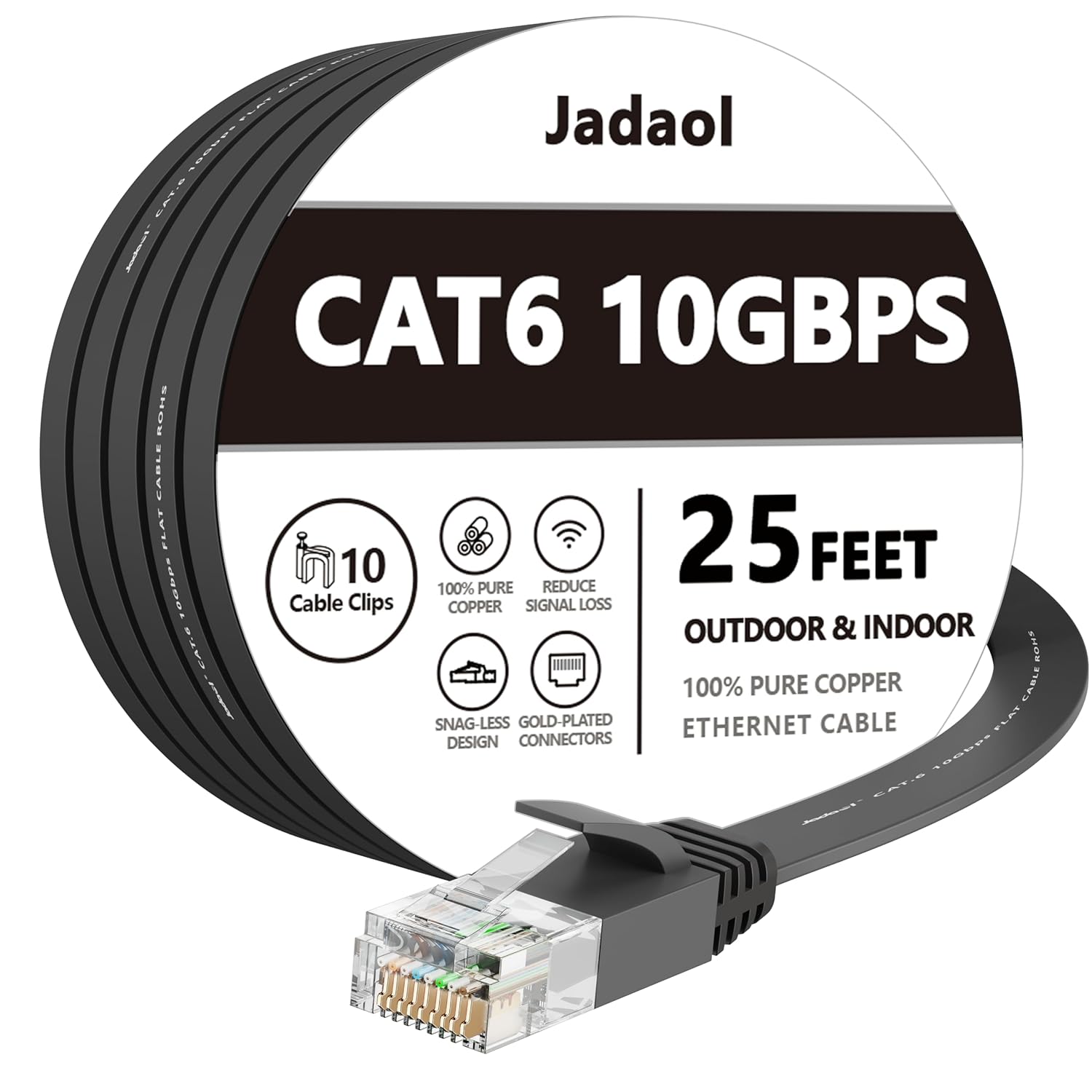
Needed for this step
Jadaol Cat 6 Ethernet Cable 25 ft, 10Gbps Suppo...
This helps complete the fix you are currently reading.
$9.99Reduce Network Congestion
If other devices on your network are consuming bandwidth through streaming, gaming, or large downloads the Nest Doorbell gets starved. Enable QoS Quality of Service on your router and assign the Nest Doorbell high priority. Most modern routers have QoS under Advanced or Traffic Management settings. Alternatively schedule large downloads for off-peak hours when you are less likely to need doorbell alerts.
Optimize WiFi Channel
Download a WiFi analyzer app on your phone and check which 2.4GHz channels have the most interference. Nest Doorbell uses 2.4GHz only. Switch your router to the least congested of channels 1, 6, or 11 in your router wireless settings. In dense apartments and neighborhoods channel congestion is often the primary cause of video buffering.
Wire the Battery Doorbell for Better Quality
The Nest Doorbell Battery model intentionally reduces video quality and frame rate when running on battery to extend battery life. If you have existing doorbell wiring connect it to the wires for continuous power. With wired power the camera maintains higher resolution and faster frame rates. Check that your doorbell transformer provides 16 to 24V AC. The wired connection also enables 24/7 continuous recording if you have Nest Aware.
Quick Solutions
Still having issues? This is usually the deeper cause below.
Camera issues that start suddenly almost always trace back to an upload bandwidth drop — run a speed test before assuming hardware failure.
If you have multiple Nest cameras each one needs 2 to 4 Mbps upload bandwidth. Three cameras require 6 to 12 Mbps upload. Most residential internet plans provide only 5 to 10 Mbps upload. Calculate your total camera bandwidth needs and compare with your internet plan upload speed.
This issue almost always looks more complex than it is — the majority of cases trace back to a single setting, a stale credential, or a default that shipped wrong.
- Home internet upload speed is below the 2 Mbps
- WiFi signal between doorbell and router is weak
- Router bandwidth is saturated by other devices streaming or
- Nest Doorbell battery model reduces quality to conserve battery
- 2.4GHz WiFi channel congestion from neighboring networks degrading throughput
Before you go — try one of these (they fix most cases).
Most popular upgrades chosen by Google Nest Doorbell owners.

Smart WiFi Wireless Doorbell Chime for Google Nest, Ring,...

Google Nest Doorbell (Wired, 3rd Gen) - 2K Video and Gemi...

Google Nest Doorbell (Wired) - Formerly Nest Hello - Vide...
As an Amazon Associate we earn from qualifying purchases.
Official Manufacturer Manual
If you need the complete manufacturer documentation for advanced setup, wiring diagrams, or detailed specifications, you can download the official manual below. The manual includes full technical instructions directly from the manufacturer and may help if your issue requires deeper troubleshooting.
Download the Official Google Nest Doorbell ManualSource: support.google.com
Need More Help? Google Nest Support
Note: The contact information below connects you directly to Google Nest's official customer support team, not Trunetto. They can help with warranty claims, device replacements, and advanced technical issues.
How Does Google Nest Compare?
Before replacing your Google Nest device, see how it stacks up against alternatives in our full comparison guides.
Accessories owners commonly pair with Google Nest Doorbell.

As an Amazon Associate we earn from qualifying purchases.


